Experience the soul-warming depths of South India with this vibrant, velvety plantain curry. Inspired by the traditional “Erissery” or “Kalan” styles of Kerala, this dish transforms humble green plantains into a gourmet masterpiece. Every spoonful offers a balance of earthy turmeric, rich coconut fat, and the sharp, aromatic pop of toasted mustard seeds.
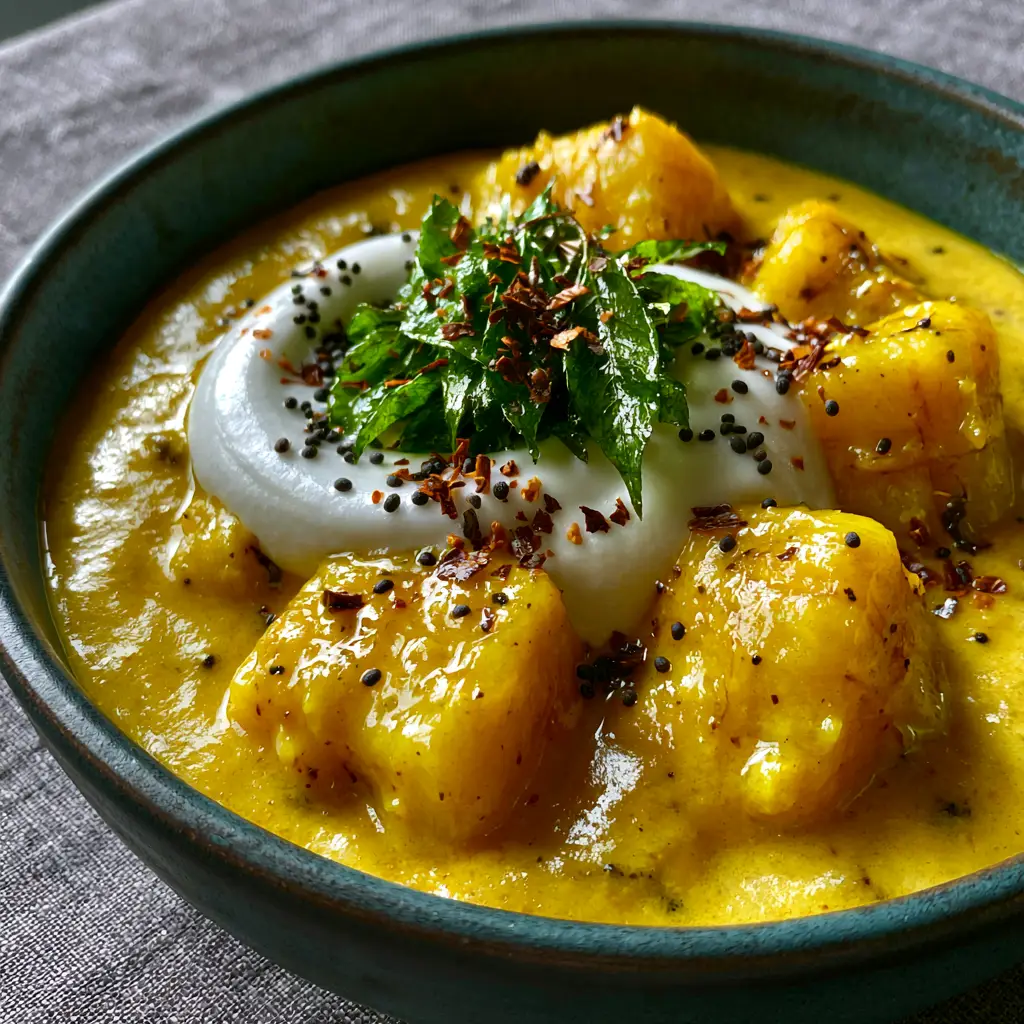
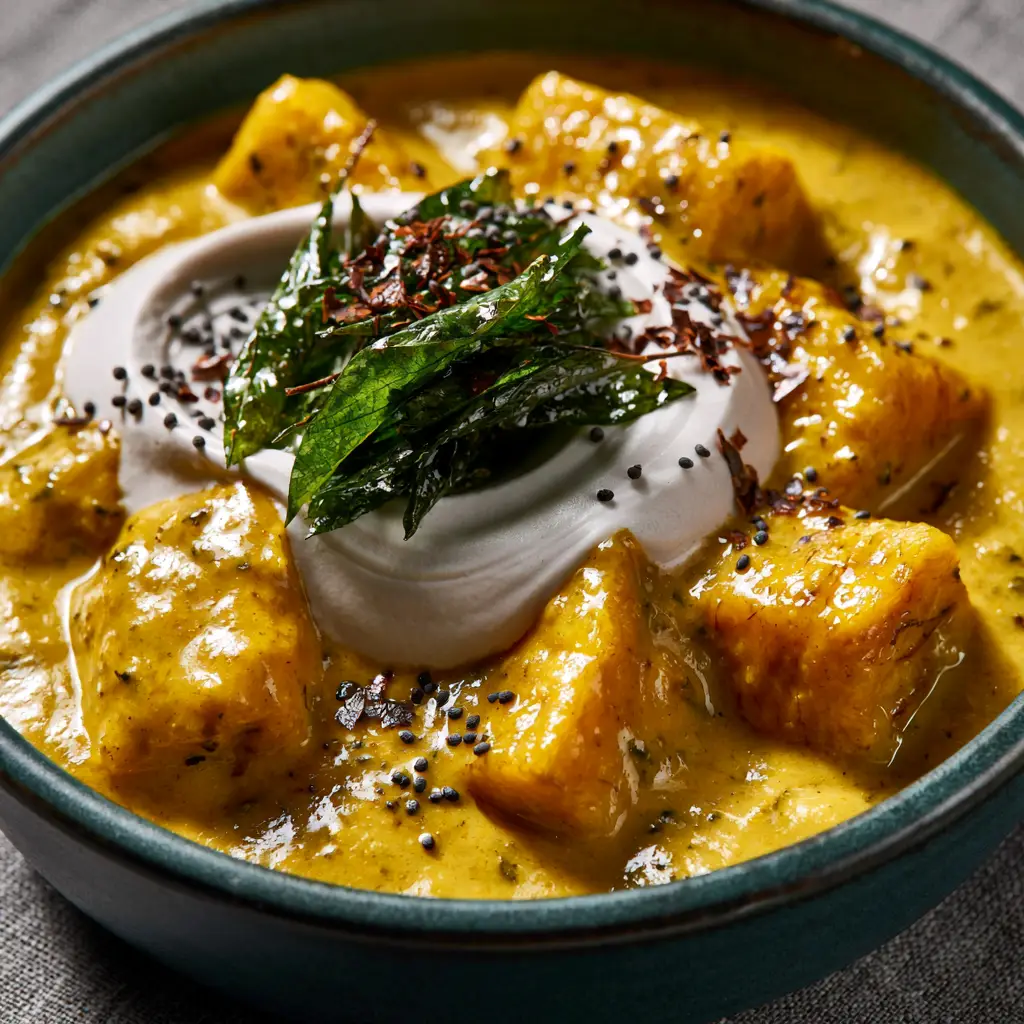
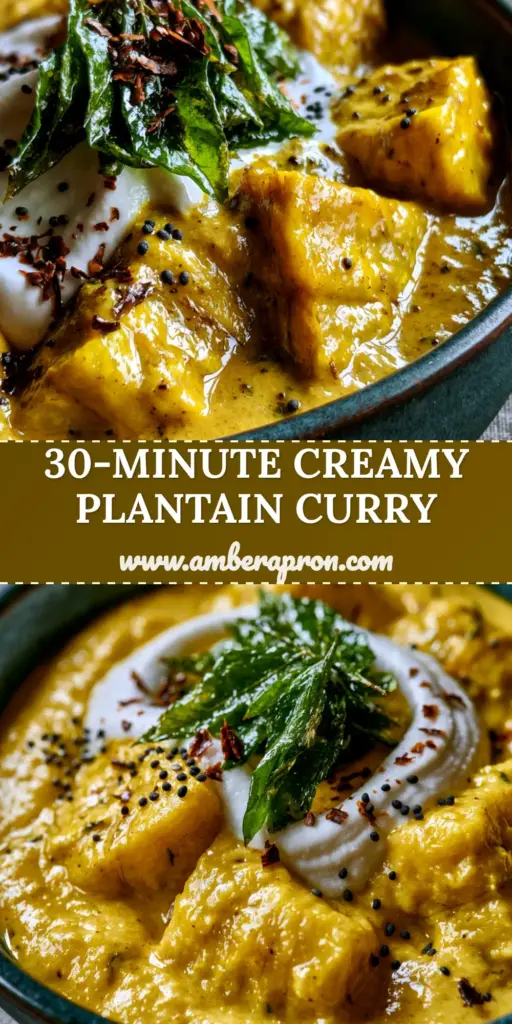
Visually, this plantain curry is a showstopper. Imagine a rustic dark teal ceramic bowl filled with a thick, opaque golden sauce that glistens under natural light. The tender cubes of poached plantain are hugged by a sauce so rich it feels like silk on the palate, topped with an artistic swirl of thick coconut cream and the contrasting crunch of flash-fried curry leaves.
Whether you are a seasoned fan of tropical flavors or a curious home cook looking for a plant-based centerpiece, this recipe delivers professional results. We focus on culinary precision, ensuring your plantains are perfectly poached—never mushy—and your spices are tempered to release their maximum essential oils.
Why This Vibrant Plantain Curry is a Must-Make
- Tender Texture: By poaching the green plantain cubes separately, we ensure they maintain their structural integrity while becoming melt-in-your-mouth tender.
- Visual Contrast: The deep turmeric-gold base against the bright white swirl of coconut cream creates a professional, restaurant-quality presentation.
- Layered Aromatics: The “tadka” or tempering of black mustard seeds and curry leaves provides a smoky, nutty finish that defines authentic Kerala-style cooking.
- Naturally Vegan and Gluten-Free: This recipe relies on the inherent creaminess of coconut milk, making it accessible to a wide variety of dietary needs.
Essential Ingredients for the Perfect Golden Sauce
To achieve the specific visual and flavor profile of this plantain curry, choosing the right ingredients is paramount. We focus on high-fat coconut products and fresh aromatics to build a complex flavor foundation.
Green Plantains: Use 3 large (approx. 750g) green plantains. They must be firm and green, not yellow, to ensure the cubes hold their shape during the poaching process.
Full-Fat Coconut Milk: 1 can (400ml) provides the opaque, velvety base. Low-fat versions will not yield the glossy, thick texture seen in the visual blueprint.
Fresh Curry Leaves: 2 sprigs (about 20 leaves) are essential for that distinct Kerala aroma. When flash-fried, they turn a translucent, bright green that looks stunning against the gold sauce.
Turmeric Powder: 1 tsp (3g) provides the vibrant, sun-drenched color. This is the primary pigment for our “turmeric-gold” aesthetic.
Black Mustard Seeds: 1 tsp (3g) of these tiny seeds adds a nutty pungency and a beautiful visual “speckle” to the finished dish.
Dried Red Chili Flakes: 1 tsp (2g) provides a controlled heat and a pop of crimson color to contrast the golden sauce.
Coconut Cream: 2 tbsp (30ml) of chilled, thick cream is used for the final artistic swirl. This adds a layer of luxury and visual depth.
Aromatics: A paste made of 1 inch (2.5cm) fresh ginger, 3 cloves of garlic, and 2 small shallots forms the invisible flavor backbone of the curry.
Specialized Tools for Crafting Authentic Kerala Curry
While you don’t need a professional kitchen, a few specific tools will help you achieve the “macro shot” perfection described in our prompt.
- Heavy-Bottomed Pot or Dutch Oven: Essential for even heat distribution to prevent the coconut milk from scorching.
- Small Tadka Pan or Skillet: Used for the final tempering of spices. The small surface area ensures the mustard seeds toast evenly without burning the oil.
- Sharp Chef’s Knife: To achieve those perfectly uniform cubes of plantain that look so striking in the bowl.
- Whisk: To incorporate the turmeric and coconut milk into a smooth, emulsified golden sauce.
Step-by-Step Guide to Poaching and Simmering
Preparing and Poaching the Plantains
Begin by peeling the 3 large (750g) green plantains. Cut them into uniform 1-inch (2.5cm) cubes. In a medium pot, combine the cubes with 2 cups (480ml) of water, ½ tsp (1.5g) turmeric powder, and 1 tsp (6g) sea salt.
Bring the water to a gentle boil, then reduce to a simmer. Cover and poach for 10-12 minutes. You are looking for a visual cue: the plantains should turn from a pale white to a soft yellow and be easily pierced with a fork but still firm enough to hold their “cube” shape.
Building the Opaque Golden Base
While the plantains poach, heat 1 tbsp (15ml) of coconut oil in your heavy-bottomed pot over medium heat. Add your minced shallots, ginger, and garlic. Sauté for 3-4 minutes until they are translucent and fragrant, but not browned.
Whisk in the remaining ½ tsp (1.5g) turmeric and ½ tsp (1.5g) freshly cracked black pepper. Pour in 1 can (400ml) of full-fat coconut milk. Stir constantly as the sauce begins to simmer, watching for the color to transform into a deep, opaque turmeric-gold. Use a spoon to check the viscosity; it should coat the back of the spoon in a thick, velvety layer.
Combining and Harmonizing
Drain the poached plantain cubes and gently fold them into the golden coconut base. Let the mixture simmer together on low heat for 5 minutes. This allows the plantains to absorb the coconut fats and spices. If the sauce becomes too thick, add a splash of water or vegetable stock to maintain that “glistening” appearance.
Mastering the Tempering: Mustard Seeds and Curry Leaves
The final “bloom” of spices is what elevates this plantain curry from a simple stew to a culinary experience. This step creates the “fried green curry leaves” and “toasted black mustard seeds” specified in the visual blueprint.
In a small skillet, heat 1 tbsp (15ml) of coconut oil until it is shimmering. Add 1 tsp (3g) of black mustard seeds. Wait for the sound: they will begin to pop and crackle like tiny firecrackers. Immediately add the fresh curry leaves and 1 tsp (2g) of dried red chili flakes.
Flash-fry for only 10-15 seconds. The curry leaves should become crisp and translucent-green, but not brown. Pour this hot, aromatic oil and the toasted spices directly over the curry. Do not stir it in completely; leave the spices resting on the surface for maximum visual impact.
Pro Tips for Creamy Texture and Visual Balance
- The Swirl Technique: To get that “heavy artistic swirl” of coconut cream, use a spoon to drop small dollops of cream in a circular pattern, then use a toothpick to gently drag the cream through the sauce.
- Don’t Overcook: If the plantains are poached too long, they will release starch that turns the sauce gummy. Stick to the 10-12 minute poaching window.
- Emulsification is Key: If your coconut milk begins to separate (look for oily beads), whisk in a teaspoon of cornstarch mixed with water to pull the sauce back into a velvety emulsion.
- Seasoning at the End: Always do a final salt check after the coconut milk has reduced. Coconut milk has a natural sweetness that may require an extra pinch of salt to balance the earthy turmeric.
Storage and Reheating for Make-Ahead Meals
This plantain curry actually improves in flavor the next day as the plantains continue to marinate in the spiced coconut milk. Store leftovers in an airtight container in the refrigerator for up to 4 days.
When reheating, do so gently on the stovetop over low heat. Coconut milk can “split” if microwaved at high power or boiled too vigorously. Add a tablespoon of water to loosen the sauce if it has thickened too much in the fridge. Note that the fried curry leaves will lose their “flash-fried” crunch upon reheating, but their flavor remains intact.
Perfect Pairings and Serving Suggestions
To round out your meal, serve this curry with a side of steamed Basmati rice or traditional South Indian Appams. If you’re looking for more global inspiration, consider these pairings from our collection:
- For a refreshing side, try this Mexican Street Corn Salad which offers a bright lime contrast.
- Looking for more plant-based dinner ideas? Our Korean Beef Bowls can easily be adapted with tofu.
- If you want to keep the tropical theme going for dessert, these Mango Strawberry Sunset Cupcakes are the perfect finish.
- For a lighter side, this Asian Ramen Coleslaw provides a wonderful crunch.
Frequently Asked Questions About Plantain Curry
Yellow plantains are much sweeter and softer. While edible, they will not hold the distinct ‘cube’ shape or provide the starchy, savory contrast intended for this Kerala-style dish.
Avoid boiling the sauce vigorously once the coconut milk is added. Keep the heat on low-medium and whisk frequently to maintain a smooth emulsion.
This recipe is medium-mild. The heat comes primarily from the dried chili flakes and black pepper. You can adjust the chili flakes to suit your personal heat preference.
Fresh curry leaves are usually found in Indian or South Asian grocery stores. If unavailable, you can omit them, but do not substitute with curry powder, as the flavor profile is completely different.
The vibrancy comes from high-quality turmeric powder and the fat content of the coconut milk. Ensure you are using full-fat milk and a fresh tin of turmeric.
The Ultimate Plantain Curry Recipe Card
Plantain Curry Recipe: Creamy Golden Coconut Milk Kerala Style
Ingredients
Equipment
Method
- Simmer cubed green plantains in water with turmeric and salt for 10-12 minutes until tender but firm.
- Sauté ginger, garlic, and shallots. Add coconut milk and turmeric, whisking until a thick, golden sauce forms.
- Flash-fry mustard seeds, curry leaves, and chili flakes in coconut oil until seeds pop and leaves are crisp.
Notes
Use full-fat coconut milk for the required glossy visual texture.
Closing & Call to Action
This plantain curry is more than just a meal; it’s a sensory journey through the spice gardens of Kerala. The combination of the golden, velvety sauce and the aromatic tempering creates a dish that is as beautiful to look at as it is to eat. We hope this recipe becomes a staple in your plant-based rotation.
Did you try the coconut cream swirl? We’d love to see your creations! Leave a comment below and let us know how your curry turned out. Don’t forget to save this recipe to your boards on Pinterest for your next dinner party!