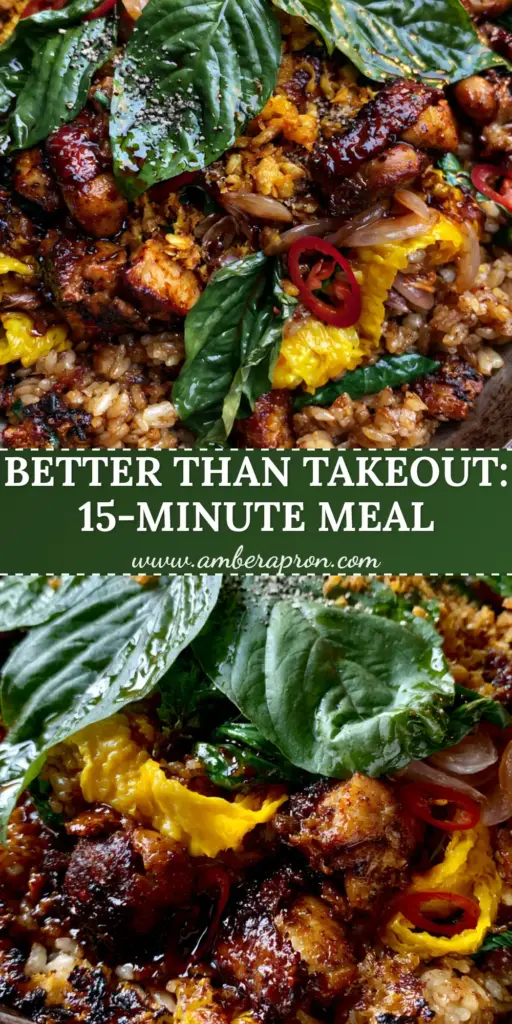
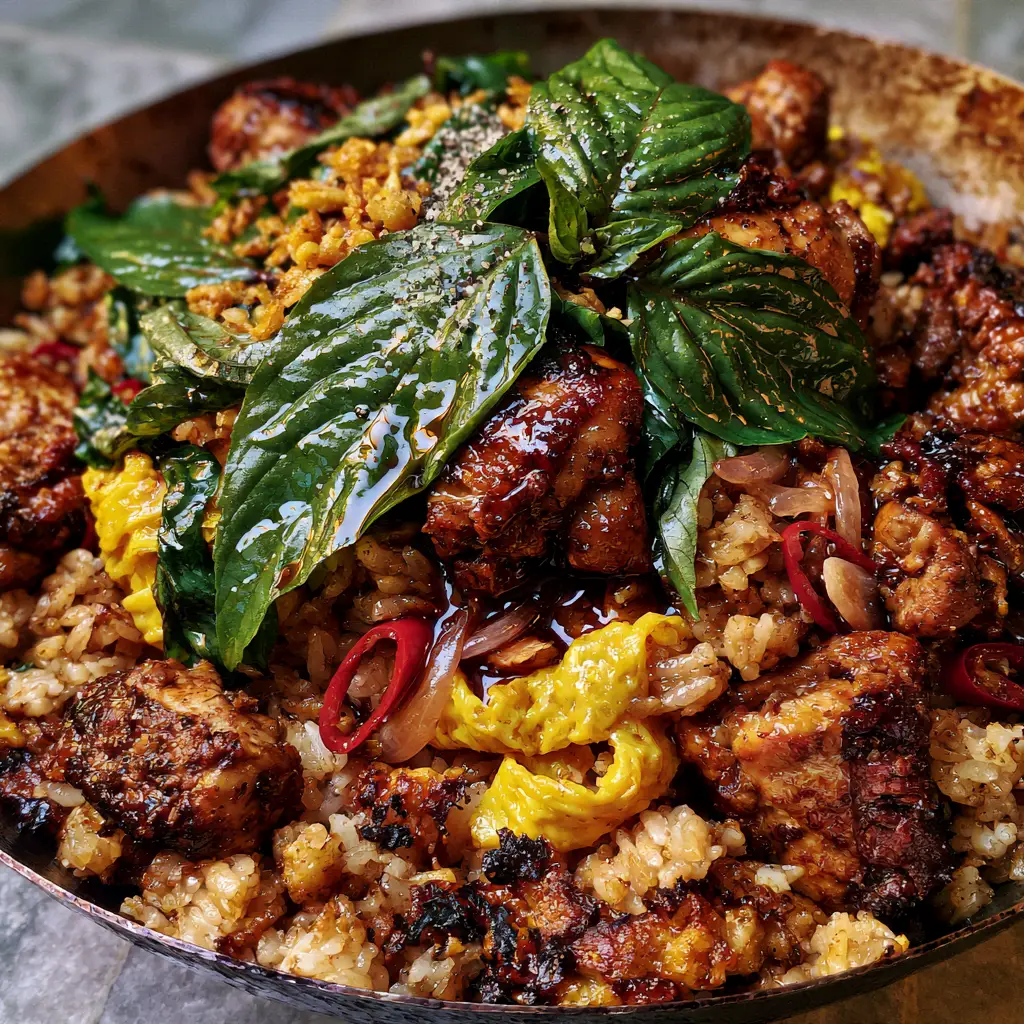
There is a specific, intoxicating aroma that fills a Thai street market—a heady mix of caramelizing sugar, pungent garlic, and the peppery punch of Thai basil hitting a red-hot wok. This Thai basil chicken fried rice captures that exact sensory experience, delivering deeply seared chicken and rice with those coveted “wok hei” charred edges.
Most home-cooked fried rice lacks the textural contrast found in professional kitchens, often turning out soggy or bland. By following this forensic approach to searing and layering flavors, you will achieve individual grains of rice that are toasted to a golden-brown perfection, just like the glistening, macro-shot quality dishes you see in high-end culinary photography.
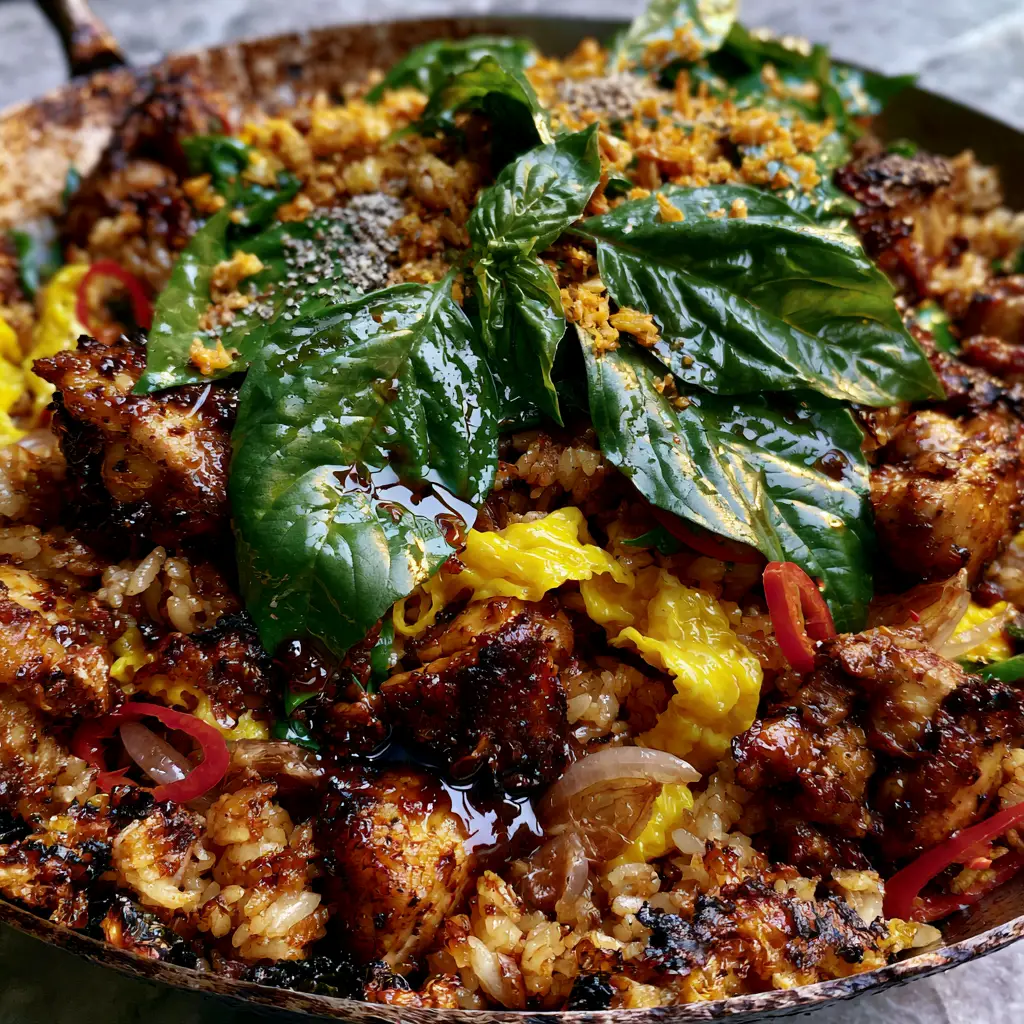
The secret lies in the marriage of the dark soy sauce glaze and the high-heat conductivity of a carbon steel wok. Every bite offers a transition from the soft, scrambled egg ribbons to the crunch of minced fried garlic and the lingering heat of sliced red bird’s eye chilies.
Why This Authentic Thai Basil Chicken Fried Rice Works
- Textural Mastery: We focus on achieving “toasted rice edges” and “deeply seared chicken thigh pieces” to ensure every mouthful has a satisfying crunch.
- Balanced Heat: The use of fresh red bird’s eye chilies provides a sharp, clean heat that cuts through the rich, savory dark soy sauce glaze.
- Aromatic Depth: By using both sautéed shallots and minced fried garlic, we build a complex flavor foundation that far surpasses basic recipes.
- Visual Brilliance: Large, emerald-green Thai basil leaves are added at the final second, wilting just enough to release their oils while maintaining a stunning color.
The Anatomy of Flavor: Ingredients for Success
To recreate the dish described in our visual blueprint, each ingredient must be selected for its specific chemical and aesthetic contribution. We aren’t just making a meal; we are engineering a masterpiece of Thai street food at home.
Boneless Skinless Chicken Thighs (450g / 1lb): We use thighs because their higher fat content allows for a “deeply seared” exterior without drying out during the high-heat stir-fry process. Cut these into bite-sized, uniform pieces to ensure even cooking.
Day-Old Jasmine Rice (600g / 3-4 cups cooked): Cold, leftover rice is non-negotiable for achieving “individual, distinct grains.” Fresh rice contains too much moisture, which leads to clumping rather than toasting.
Thai Basil Leaves (1 cup / 30g): Unlike Italian basil, Thai basil (Horapha) has a sturdy leaf that stands up to heat and offers a distinct anise-like, peppery flavor. Look for the characteristic purple stems and emerald-green leaves.
Red Bird’s Eye Chilies (3-5 pieces): These provide the “thin rounds of red” seen in our blueprint. They are small but potent; adjust the quantity based on your personal heat tolerance.
Dark Soy Sauce (1 tbsp / 15ml): This is the secret to the “dark, savory soy-based glaze.” It is thicker and less salty than regular soy sauce, providing a rich mahogany color and a hint of molasses sweetness.
Shallots and Garlic: You will need 2 large shallots (60g) and at least 4 cloves of garlic (20g). The shallots provide a translucent, sweet base, while the garlic is fried until golden and crisp.
Neutral High-Smoke Point Oil (3 tbsp / 45ml): Use grapeseed, avocado, or canola oil. Avoid olive oil, as it will smoke and turn bitter at the temperatures required for this recipe.
Essential Gear for the Ultimate Wok Char
While you can use a heavy stainless steel skillet, a 14-inch carbon steel wok is the gold standard for Thai basil chicken fried rice. The thin walls of the wok allow for rapid temperature changes, which is vital for “toasting the rice edges” without overcooking the center.
You will also need a sturdy metal wok spatula. This tool allows you to scrape the bottom of the pan aggressively, ensuring the caramelized soy sauce doesn’t burn but instead coats the rice in a glistening glaze. If you enjoy this style of cooking, you might also want to try this Japanese BBQ chicken fried rice for a different flavor profile.
Developing the Base: Searing the Chicken and Aromatics
The Initial Sear and Maillard Reaction
Place your wok over high heat until a drop of water flicked onto the surface evaporates instantly. Add 1 tablespoon (15ml) of oil and swirl to coat. Add the chicken thigh pieces in a single layer, resisting the urge to move them for at least 60-90 seconds.
You are looking for a “deeply seared” crust that is dark golden-brown. Once seared, toss the chicken until cooked through and remove it from the wok to prevent toughening. The remaining fat in the wok is now infused with chicken essence, perfect for the next step.
Building the Aromatic Foundation
Add another tablespoon of oil if the wok looks dry. Lower the heat to medium-high and toss in the minced garlic and sliced shallots. Stir-fry for 30-45 seconds until the garlic is “golden fried” and the shallots are “translucent.”
Add the sliced bird’s eye chilies. The heat will cause the capsaicin to release into the oil, ensuring the spice is distributed evenly throughout the Thai basil chicken fried rice rather than appearing in isolated pockets.
Achieving the Perfect Rice Texture and Glaze
Toasting the Jasmine Rice
Turn the heat back to maximum. Add the cold jasmine rice to the wok, using your spatula to break up any large clumps. Spread the rice out against the sides of the wok to maximize surface area contact.
Let the rice sit undisturbed for 30 seconds at a time. This is how you achieve those “charred, crispy edges” mentioned in our visual prompt. You should hear a distinct crackling sound—this is the moisture leaving the rice and the sugars beginning to caramelize.
The Dark Soy Sauce Glaze and Egg Ribbons
Push the rice to one side of the wok and add the remaining oil to the empty space. Pour in two beaten eggs. Let them set for 10 seconds, then gently swirl them into “bright yellow ribbons” before folding them into the rice.
Drizzle the dark soy sauce, light soy sauce, and a splash of fish sauce around the perimeter of the wok, not directly onto the rice. This “sears” the sauce before it hits the grains, creating a “glistening dark glaze” and a deeper smoky flavor.
The Final Flourish: Thai Basil and Sensory Cues
Return the seared chicken to the wok. Toss everything together vigorously to ensure every grain is coated in the mahogany glaze. The rice should look “oily and glistening” but not greasy.
Turn off the heat. This is the most critical step for the basil. Add the large, whole Thai basil leaves. The residual heat will cause them to become “slightly wilted” while retaining their “emerald-green” hue.
Sprinkle a generous pinch of white pepper over the top. The white pepper provides a floral, earthy heat that is traditional in Thai cuisine and rounds out the sharpness of the chilies. If you are a fan of bold Thai flavors, you should also check out this Thai fried pork recipe.
Expert Tips for Restaurant-Quality Results
- Rinse Your Rice: If you are cooking rice specifically for this dish, rinse it 3-4 times until the water runs clear to remove excess starch.
- The “Wok Scrape”: Use the edge of your spatula to scrape the bottom of the wok constantly during the final toss to incorporate the fond (browned bits) into the rice.
- Don’t Overcrowd: If you are doubling the recipe, cook it in two batches. Overcrowding the wok leads to steaming rather than searing.
- Basil Timing: Never cook the basil over active heat for more than 10 seconds, or it will turn black and lose its aromatic oils.
Storage, Reheating, and Meal Prep
Thai basil chicken fried rice stores exceptionally well, making it a favorite for meal prep. Place leftovers in an airtight container and refrigerate for up to 3 days. The flavors often deepen overnight as the garlic and basil infuse further into the rice.
To reheat, avoid the microwave if possible, as it can make the rice rubbery. Instead, add a teaspoon of oil to a skillet over medium-high heat and toss the rice for 2-3 minutes until the “toasted rice edges” regain their crispness.
What to Serve With Thai Basil Fried Rice
This dish is a complete meal on its own, but it pairs beautifully with light, acidic sides that cleanse the palate between spicy bites. A crisp Asian ramen coleslaw provides a refreshing crunch that contrasts with the warm, savory rice.
For a full Thai-inspired feast, start with a light soup or serve alongside a Mexican street corn salad (the creamy lime dressing surprisingly complements the Thai spices). To finish the evening on a sweet note, try making some tanghulu for a crunchy, fruit-forward dessert.
Frequently Asked Questions
While you can, the flavor will change significantly. Thai basil has a sturdy leaf and an anise-like, peppery flavor that defines the dish, whereas Italian basil is much sweeter and more delicate.
Use a carbon steel wok and high heat. Let the rice sit undisturbed for 30-second intervals to allow the bottom to toast and slightly char, creating that signature ‘wok hei’.
Dark soy sauce is used primarily for the deep mahogany color and a hint of sweetness. If you don’t have it, you can use regular soy sauce with a pinch of brown sugar, but the color will be lighter.
Cut boneless chicken thighs into small, bite-sized cubes of equal size. This ensures they sear quickly and stay juicy without overcooking the rest of the ingredients.
Sogginess usually comes from using freshly cooked rice. For individual grains, use day-old rice that has been refrigerated, as the starch crystallizes and the moisture evaporates.
Authentic Thai Basil Chicken Fried Rice Recipe
Thai Basil Chicken Fried Rice with Crispy Toasted Edges
Ingredients
Equipment
Method
- Heat 1 tbsp oil in a wok over high heat. Add chicken thighs in a single layer and sear for 2 minutes until a deep golden-brown crust forms. Remove chicken and set aside.
- Add 1 tbsp oil. Stir-fry shallots, garlic, and chilies for 45 seconds until garlic is golden and shallots are translucent.
- Add cold rice to the wok. Press into the sides and let sit for 30 seconds to create charred, toasted edges. Toss and repeat.
- Push rice aside, add a little oil, and pour in eggs. Scramble into yellow ribbons before mixing with rice.
- Return chicken to the wok. Drizzle in soy sauces and oyster sauce. Toss vigorously over high heat until glistening. Turn off heat, stir in Thai basil leaves until just wilted, and sprinkle with white pepper.
Notes
Thai basil is essential; Italian basil will not provide the same flavor profile.
Conclusion: Bringing the Streets of Bangkok to Your Kitchen
Mastering Thai basil chicken fried rice is a rite of passage for any home cook looking to elevate their stir-fry game. By focusing on the visual cues—the charred rice, the glistening glaze, and the vibrant basil—you create a dish that is as beautiful as it is delicious.
We invite you to share your results! Did you get those perfect crispy edges? Leave a comment below or tag us in your photos. For more culinary inspiration and visual guides, follow us on Pinterest and join our community of enthusiastic home cooks.