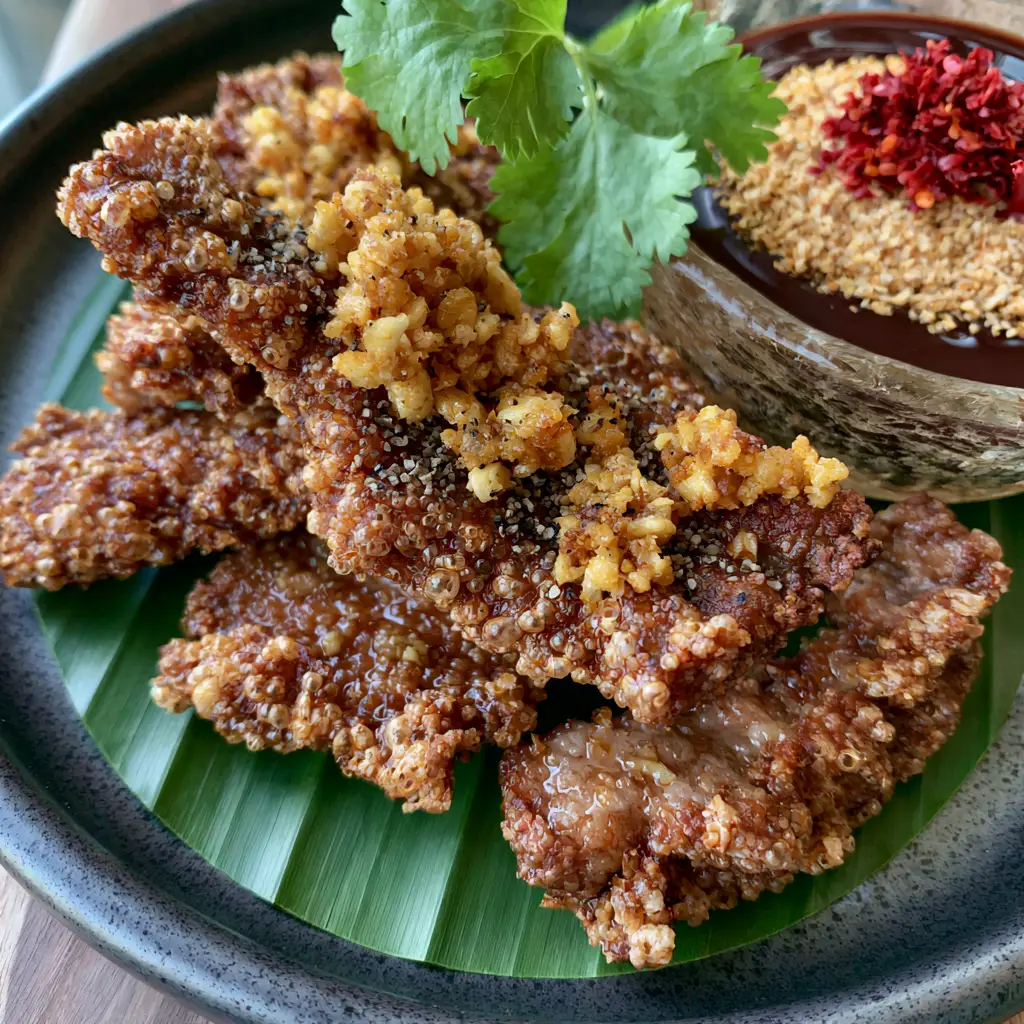
Thai Fried Pork, or Moo Tod, is more than just a simple snack; it is a masterclass in textural contrast. Imagine bite-sized strips of tender pork shoulder encased in a shattering, deeply golden-brown bubbly crust that crackles with every bite. This isn’t just fried meat; it’s a sensory experience where the aroma of toasted garlic meets the pungent heat of cracked black pepper.
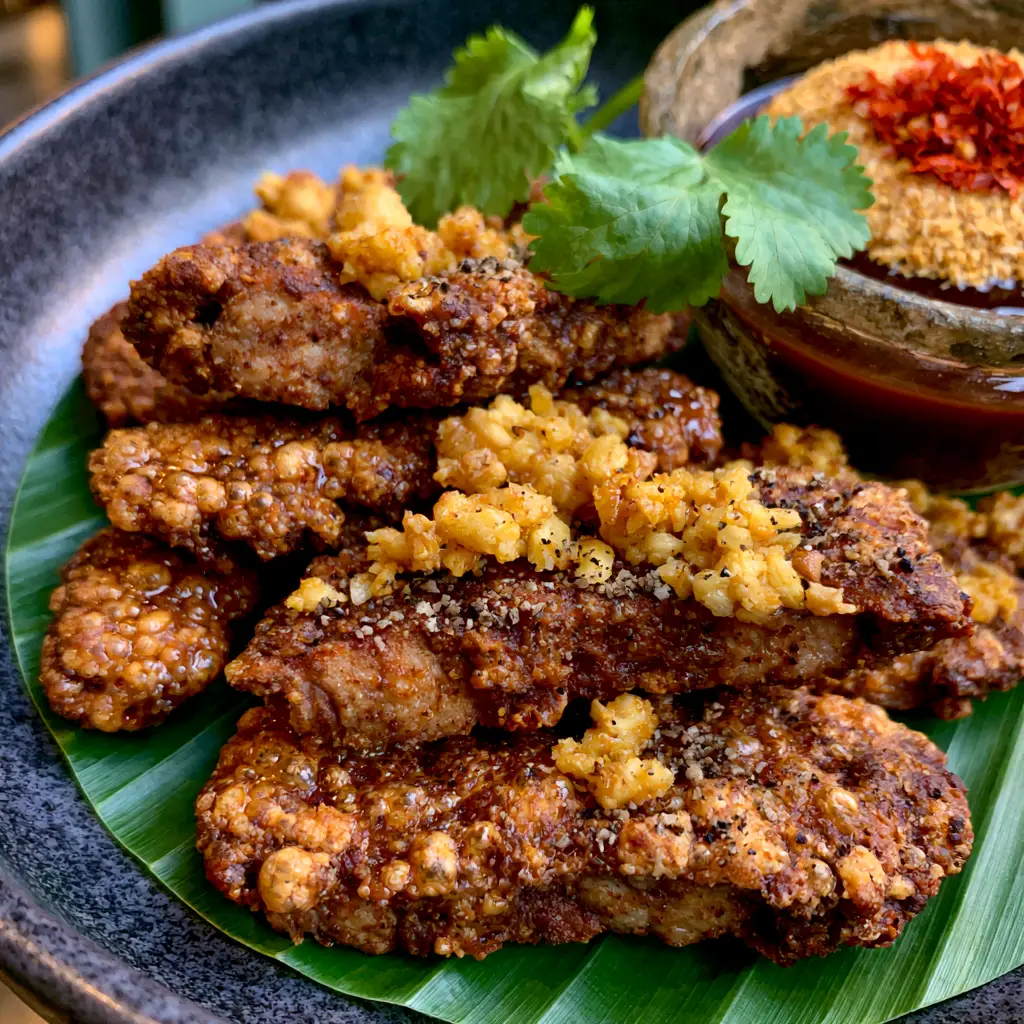
When you serve this dish on a vibrant waxy green banana leaf atop a matte charcoal ceramic plate, the colors pop with a high-end food blog aesthetic. The glistening meat, kissed by garlic-infused oil and garnished with fresh cilantro sprigs, creates an inviting centerpiece for any Southeast Asian feast. Whether you are a street food aficionado or a home cook looking for that perfect “crunch,” this recipe delivers the authentic flavors of a Bangkok night market.
To round out the meal, the pork is traditionally accompanied by a dark mahogany-colored tamarind dipping sauce. This sauce, thick with toasted rice powder and bright red dried chili flakes, provides a sour and spicy counterpoint to the rich, savory pork. It is the kind of dish that makes guests linger at the table, reaching for “just one more” crispy strip.
Why You Will Crave This Crispy Thai Garlic Pork
- The Shattering Crust: A specific blend of flours and ice-cold liquids creates a bubbly, nooks-and-crannies texture that stays crispy for hours.
- Foundational Flavor: A heavy hand with cracked black pepper and minced fried garlic ensures every bite is deeply aromatic.
- The “Jaew” Factor: The homemade tamarind sauce offers a complex balance of sweet, sour, and smoky heat that cuts through the richness.
- Perfect Pork Selection: Using pork shoulder ensures the meat remains juicy and glistening under that intense golden-brown exterior.
Essential Ingredients for Authentic Moo Tod Results
Creating the perfect Thai Fried Pork requires a balance of high-quality proteins and specific starch combinations. Here is what you need to gather for your culinary journey.
The Savory Pork and Marinade
1.5 lbs (680g) Pork Shoulder: Pork shoulder, or pork butt, has the ideal fat-to-lean ratio. This ensures the strips remain succulent even after the high-heat frying process required for that bubbly crust.
3 tbsp (45ml) Fish Sauce: This provides the essential salty, umami backbone of the dish. It seasons the meat deeply from the inside out during the marination phase.
1 tbsp (15g) Palm Sugar: Palm sugar adds a mellow, caramel-like sweetness. It helps with the browning process, giving the pork that signature deeply golden-brown hue.
1 tbsp (8g) Cracked Black Pepper: Large specks of black pepper are vital for both the visual appeal and the sharp, floral heat. It contrasts beautifully against the golden batter.
10 cloves Garlic, minced: We use a generous amount of garlic, half for the marinade and half to be fried into golden clusters. This creates a layered garlic flavor that defines authentic Thai Fried Pork.
The Shattering Bubbly Batter
1 cup (125g) Tempura Flour or Rice Flour: Rice flour is the secret to a light, crispy texture that doesn’t feel heavy. It creates the “nooks and crannies” described in the visual blueprint.
1/2 cup (120ml) Ice-Cold Club Soda: The carbonation and cold temperature react with the hot oil to create those tiny, delicate bubbles in the crust. This is the key to the “bubbly” visual requirement.
1 tsp (5g) Baking Powder: A leavening agent that further encourages the batter to puff up and stay airy. It prevents the crust from becoming a hard, flat shell.
The Mahogany Tamarind Dipping Sauce (Nam Jim Jaew)
3 tbsp (45ml) Tamarind Paste: This provides the dark mahogany color and the signature sour tang. It is the soul of the dipping sauce.
1 tbsp (10g) Toasted Rice Powder (Khao Khua): This adds a unique nutty aroma and thickens the sauce. It should be visible as a thick layer on top of the sauce bowl.
1 tbsp (5g) Dried Red Chili Flakes: Use Thai bird’s eye chili flakes for a vibrant red color and an authentic kick. They should float prominently in the mahogany sauce.
Must-Have Tools for Professional Frying
To achieve the “shattering” texture seen in high-end food photography, your equipment matters. A heavy-bottomed wok or a Dutch oven is essential for maintaining a steady oil temperature. You will also need a spider strainer to safely remove the golden pork strips while letting excess oil drain away. For the dipping sauce, a small rustic glass bowl enhances the presentation, especially when placed on a matte charcoal plate.
Step-by-Step Instructions to Perfect Thai Fried Pork
Phase 1: Marinating for Deep Flavor
Start by slicing your pork shoulder into bite-sized strips, roughly 2 inches long and 1/2 inch wide. In a large bowl, combine the fish sauce, palm sugar, half of the minced garlic, and the cracked black pepper. Massage the marinade into the pork for at least 3 minutes; this physical action helps the fibers absorb the seasoning.
Let the pork rest in the refrigerator for at least 30 minutes. This resting period allows the palm sugar to dissolve and the fish sauce to tenderize the meat. You should notice the meat becoming slightly tacky and glistening with the seasoning oil.
Phase 2: Preparing the Golden Fried Garlic Clusters
Before frying the pork, we create our garlic garnish. In a wok over medium heat, add 1 cup (240ml) of neutral frying oil. Add the remaining minced garlic while the oil is still cool, allowing it to come up to temperature together.
Stir constantly until the garlic turns a pale golden-brown. Immediately remove it with a fine-mesh strainer; it will continue to darken as it cools. This “garlic-infused oil” will now be used to fry the pork, adding another layer of flavor to the batter.
Phase 3: The Batter and the First Fry
Whisk together the rice flour and baking powder. Slowly pour in the ice-cold club soda while whisking gently. Do not overmix; a few small lumps are fine and actually contribute to the bubbly texture.
Dredge the marinated pork strips in the batter until they are fully coated. Heat your garlic-infused oil to 350°F (175°C). Drop the strips in one by one, being careful not to overcrowd the wok. Fry until the pork is a pale golden color, about 3-4 minutes.
Phase 4: The Double-Fry for Maximum Crunch
To achieve that “shattering” deeply golden-brown crust, a second fry is necessary. Remove the pork and increase the oil temperature to 375°F (190°C). Return the pork to the oil for 1-2 minutes.
Watch for the visual cue: the batter should transform into a bubbly, dark golden-brown landscape with visible nooks and crannies. The meat should look glistening and moist inside the crisp shell. Drain the strips on a wire rack to ensure they stay crispy.
Expert Tips for Success
- Temperature Control: Use an instant-read thermometer. If the oil is too cool, the batter will absorb grease; if it is too hot, the garlic in the marinade will burn before the pork is cooked.
- Cold Liquid is Crucial: The thermal shock between the ice-cold club soda batter and the hot oil is what creates the bubbly, airy crust.
- Fresh Toasted Rice: For the dipping sauce, toast raw sticky rice in a dry pan until golden, then grind it. The aroma is far superior to store-bought versions.
- Banana Leaf Prep: If using a fresh banana leaf, quickly pass it over an open flame to soften it and bring out its waxy, vibrant green sheen.
Safe Storage and Reheating Methods
Thai Fried Pork is best enjoyed immediately to preserve its shattering texture. However, you can store leftovers in an airtight container in the refrigerator for up to 3 days. To reheat, avoid the microwave, which will make the batter soggy.
For the best results, use an air fryer at 375°F (190°C) for 3-5 minutes until the oil begins to sizzle again. This will revive the bubbly crust and the glistening garlic-oil finish. The tamarind sauce can be kept in a glass jar for up to a week; just add the toasted rice powder right before serving to maintain its texture.
What to Serve With Thai Fried Pork
This crispy delight is versatile enough to be a snack or a main course. For an authentic experience, serve it alongside a bowl of steaming jasmine rice or sticky rice. It pairs beautifully with the herbaceous notes of Thai basil chicken fried rice for a full-flavored dinner.
If you want to balance the richness of the fried pork, consider a bright, acidic side like this crunchy ramen coleslaw. For a multi-regional spread, these pork strips also work surprisingly well as a protein addition to savory beef bowls. And for those looking for a sweet finish to a spicy meal, try making some homemade fruit tanghulu for a satisfyingly crunchy dessert.
Frequently Asked Questions
While you can cook pork in an air fryer, you won’t achieve the same ‘shattering bubbly’ crust as deep frying. The air fryer is, however, the absolute best tool for reheating leftovers to restore their crunch.
The secret is using ice-cold club soda and a leavening agent like baking powder. The reaction between the cold, carbonated liquid and the hot oil creates those signature nooks and crannies.
Pork shoulder (also known as pork butt) is the best choice because its higher fat content keeps the strips juicy and glistening under the high heat of deep frying.
Toasted rice powder is made from dry-roasting raw sticky rice and grinding it into a coarse powder. It provides a smoky, nutty flavor and essential texture to the tamarind sauce; skipping it will result in a less authentic sauce.
Garlic burns very quickly. The key is to start the garlic in cool oil and remove it as soon as it turns light golden, as the residual heat will continue to cook it once removed.
Authentic Thai Fried Pork Recipe Card
Thai Fried Pork: The Ultimate Crispy Garlic Moo Tod Recipe
Ingredients
Equipment
Method
- Mix pork shoulder strips with fish sauce, palm sugar, half the garlic, and black pepper. Chill for 30 minutes.
- Fry the remaining garlic in oil over medium heat until golden. Remove and set aside for garnish.
- Whisk rice flour, baking powder, and ice-cold club soda until just combined.
- Dredge pork in batter and fry at 350°F (175°C) until light golden. Increase heat to 375°F (190°C) and fry again until bubbly and dark golden-brown.
- Place pork on a banana leaf-lined charcoal plate. Top with fried garlic and cilantro. Serve with tamarind sauce.
Notes
Always double-fry for the most shattering, long-lasting crunch.
Closing & Call to Action
Mastering Thai Fried Pork at home brings the vibrant energy of Thai street food directly into your kitchen. The combination of the shattering crust, the aromatic garlic, and that mahogany dipping sauce is truly unforgettable. If you enjoyed this recipe, please leave a comment below and share your results! Don’t forget to save this recipe to your favorite boards on Pinterest for your next dinner party.