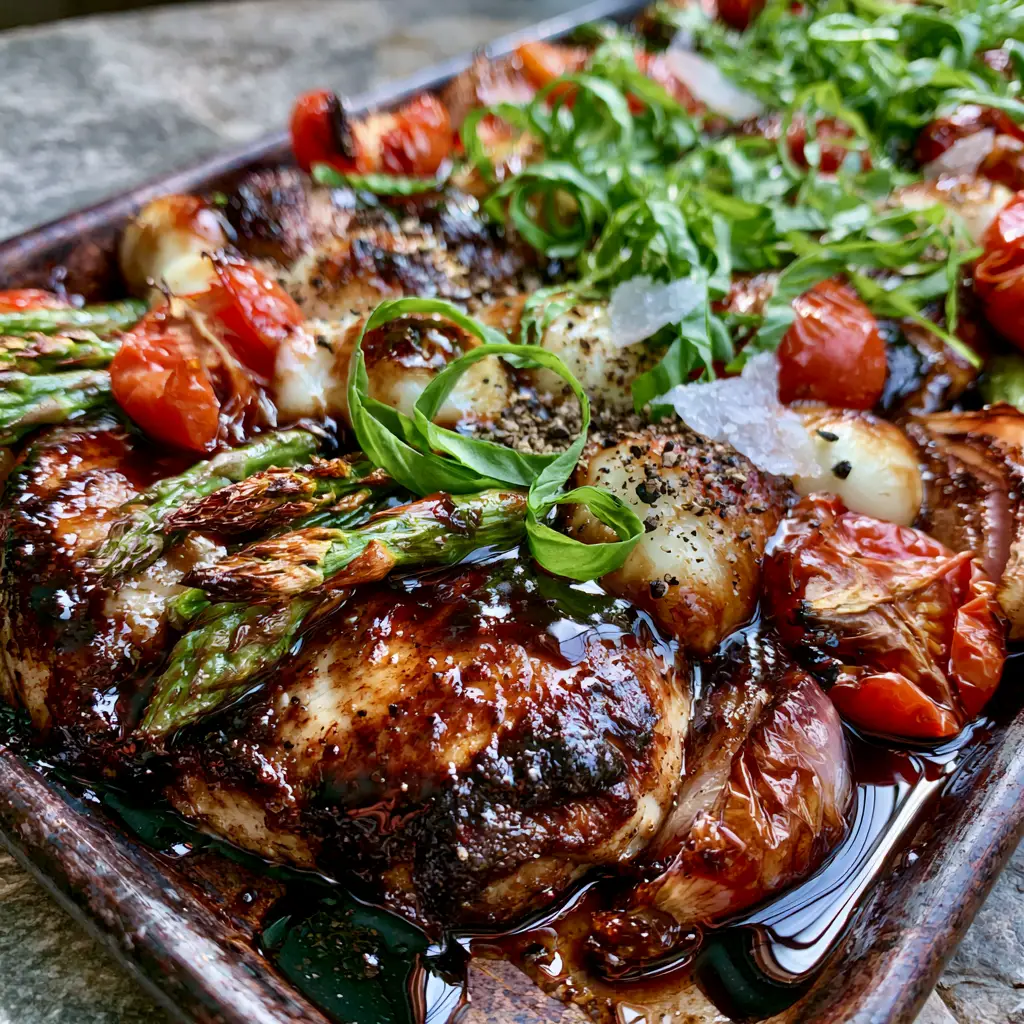
There is a specific kind of culinary magic that happens when high-quality balsamic vinegar meets a screaming hot pan. This Balsamic Chicken isn’t just another weeknight dinner; it is a masterclass in texture and depth of flavor. Imagine succulent, thick-cut chicken breasts seared to a deep mahogany brown, their edges caramelized and crisp, nestled against vibrant vegetables and gooey cheese.
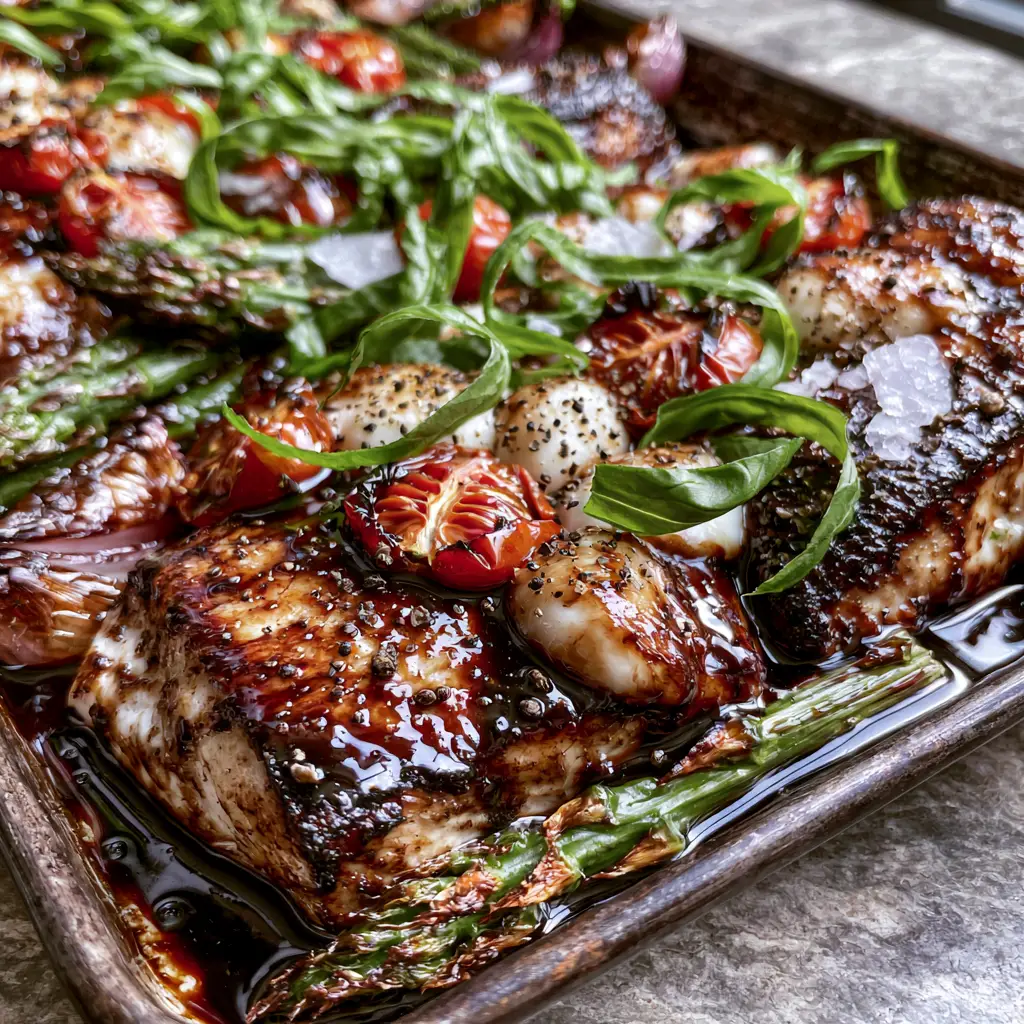
The visual appeal is undeniable. We are talking about dark, syrupy glazes that pool in the corners of a rustic metal sheet pan, perfectly blistered cherry tomatoes with charred, splitting skins, and tender asparagus spears with toasted, crunchy tips. It’s the kind of meal that looks like it belongs on a professional food stylist’s portfolio but comes together in your own kitchen with minimal effort.
By combining the science of the Maillard reaction with the acidic brightness of a balsamic reduction, we create a dish that hits every sensory note. The creamy mozzarella pearls provide a cooling contrast to the peppery basil and the sharp, sweet tang of the glaze. Let’s dive into how to achieve this Pinterest-perfect result every single time.
Why This One-Pan Balsamic Chicken Recipe Works
- Textural Contrast: You get the crunch of toasted asparagus tips, the pop of blistered tomatoes, and the “pull” of melted mozzarella pearls in every bite.
- The Ultimate Glaze: We use a specific reduction technique to ensure the balsamic coating is thick, syrupy, and clings to the chicken rather than running off.
- Efficient One-Pan Workflow: By utilizing a dark metal sheet pan, we maximize heat absorption to ensure the red onions caramelize while the chicken stays juicy.
- Visual Forensics: Every element, from the basil chiffonade to the cracked black pepper, is designed to create a high-contrast, restaurant-quality presentation.
The Pantry Staples for Peak Flavor
Thick-Cut Chicken Breasts: Look for 8oz (225g) portions. Thick cuts allow for a hard sear on the outside without overcooking the center, ensuring that “deeply browned” visual cue from our blueprint.
Balsamic Vinegar of Modena: This is the backbone of our Balsamic Chicken. Use a quality vinegar that has a natural syrupy consistency even before reduction to achieve that heavy, dark coating.
Mozzarella Pearls: These small, fresh cheese balls melt faster and more evenly than shredded cheese. They provide those distinctive “gooey pearls” nestled between the protein and veg.
Cherry Tomatoes: We leave these whole so they can build internal steam. When they finally “blister” and split, they release a concentrated juice that mingles with the balsamic glaze.
Fresh Asparagus: Look for medium-thickness spears. Thin spears will turn to mush before the chicken is done, while extra-thick ones won’t achieve those desirable toasted tips.
Red Onion Wedges: Cutting the onion into thick wedges rather than slices allows them to caramelize slowly. They provide a jammy sweetness that cuts through the acidity of the vinegar.
Honey or Brown Sugar: A small amount (1 tbsp / 15ml) is the “invisible” essential. It provides the glucose necessary to achieve the heavy, syrupy glaze seen in the visual prompt.
High-Smoke Point Oil: Use avocado or light olive oil for the initial sear. Extra virgin olive oil will smoke too much at the temperatures required for those caramelized edges.
Essential Tools for the Perfect Sear
To achieve the “rustic dark metal sheet pan” look and the associated char, your equipment matters. A heavy-duty, dark-colored rimmed baking sheet is superior for roasting as it absorbs more radiant heat than shiny aluminum, leading to better browning on the asparagus and onions.
You will also need a high-quality cast-iron skillet for the initial sear. While this is a “one-pan” finish, the secret to professional Balsamic Chicken is starting the chicken on the stovetop to lock in juices and create that dark crust before transferring everything to the oven.
Step-by-Step Instructions for Culinary Perfection
Preparing the Balsamic Base
In a small saucepan, combine 1/2 cup (120ml) balsamic vinegar with 1 tbsp (15ml) honey and a pinch of salt. Simmer over medium-low heat for 8-10 minutes until it coats the back of a spoon. This reduction is what creates the “heavy, dark, syrupy” look described in our visual guide.
Achieving the Golden-Brown Sear
Season your chicken breasts generously with sea salt flakes and cracked black pepper. Heat 2 tbsp (30ml) of oil in your skillet over medium-high heat. Place the chicken smooth-side down and don’t touch it for 4 minutes. You are looking for a deep, mahogany-brown crust to form—this is the Maillard reaction in action.
Assembling the Sheet Pan
Transfer the seared chicken to your dark metal sheet pan. Surround the meat with the asparagus spears, cherry tomatoes, and red onion wedges. Drizzle the vegetables with olive oil and a portion of the balsamic glaze. Ensure the red onions are tucked in close to the chicken so they can soak up the rendered juices.
The Roasting Process and Visual Cues
Slide the pan into a 400°F (205°C) oven. Roast for 12-15 minutes. Look for the tomato skins to begin splitting and the asparagus tips to turn a dark, toasted green. This is the sensory signal that the sugars in the vegetables are concentrating.
The Final Melt and Garnish
In the final 3 minutes of cooking, scatter the mozzarella pearls over the chicken and between the vegetables. Return to the oven until the cheese is gooey and just beginning to lose its shape. Remove from the heat and immediately apply the remaining syrupy balsamic glaze, letting it pool in the corners of the pan.
Expert Tips for Success
- Dry the Protein: Always pat the chicken dry with paper towels before seasoning. Moisture is the enemy of a good sear; you want to fry the surface, not steam it.
- Don’t Crowd the Pan: Give the asparagus and tomatoes space. If they are piled on top of each other, they will steam instead of roasting, and you’ll miss out on those charred skins.
- The Carry-Over Cook: Remove the chicken when it hits an internal temperature of 160°F (71°C). It will rise to the safe 165°F (74°C) while resting, keeping the meat succulent.
- Basil Timing: Only add the fresh basil chiffonade at the very last second. The residual heat of the pan will wilt it perfectly without turning the leaves black.
Storing and Reheating Your Balsamic Chicken
This dish is best served fresh to maintain the texture of the mozzarella and asparagus. However, leftovers can be stored in an airtight container for up to 3 days. To reheat, avoid the microwave, which will make the chicken rubbery and the cheese oily.
Instead, place the chicken and vegetables back on a sheet pan and warm in a 350°F (175°C) oven for 10 minutes. This helps re-crisp the chicken edges and maintains the integrity of the balsamic glaze.
The Best Side Dishes for a Complete Meal
To soak up the extra glaze that pools in the corners of the pan, I highly recommend serving this alongside a mediterranean quinoa salad. The nutty flavor of the quinoa pairs beautifully with the acidity of the balsamic.
If you’re looking for something heartier, this chicken works incredibly well with a cheesy zucchini side dish. For those who enjoy a fusion approach, the leftover balsamic chicken can actually be sliced thin and used in chicken taco bowls for a unique Mediterranean-Mexican twist the next day.
Common Questions About One-Pan Dinners
You can marinate the chicken and chop the vegetables 24 hours in advance. However, wait to reduce the glaze and sear the chicken until just before roasting for the best results.
Yes! Chicken thighs are more forgiving and remain juicy. Increase the roasting time by 5-7 minutes to ensure they reach an internal temperature of 175°F (79°C) for the best texture.
The secret is to simmer the balsamic vinegar with a touch of honey or brown sugar until it reduces by half. It should coat the back of a spoon before you apply it to the chicken.
Add the mozzarella pearls only during the last 3-4 minutes of roasting. This gives them enough time to become gooey and melted without browning or becoming tough.
Ensure your oven is fully preheated to 400°F (205°C) and that the tomatoes are in direct contact with the dark metal sheet pan, which conducts heat more efficiently.
The Ultimate Balsamic Chicken Recipe Card
Balsamic Chicken Sheet Pan Dinner with Blistered Tomatoes and Mozzarella
Ingredients
Equipment
Method
- Simmer balsamic vinegar and honey in a saucepan for 8-10 minutes until syrupy and thickened.
- In a heavy skillet, sear chicken breasts in oil over medium-high heat for 4 minutes per side until deeply browned.
- Place chicken, asparagus, tomatoes, and onions on a sheet pan. Drizzle with oil and half the glaze.
- Roast at 400°F (205°C) for 12-15 minutes until vegetables are blistered and toasted.
- Add mozzarella pearls for the last 3 minutes. Garnish with remaining glaze, basil, and salt flakes.
Notes
Use a dark metal sheet pan for maximum vegetable caramelization.
Bring the Mediterranean to Your Kitchen
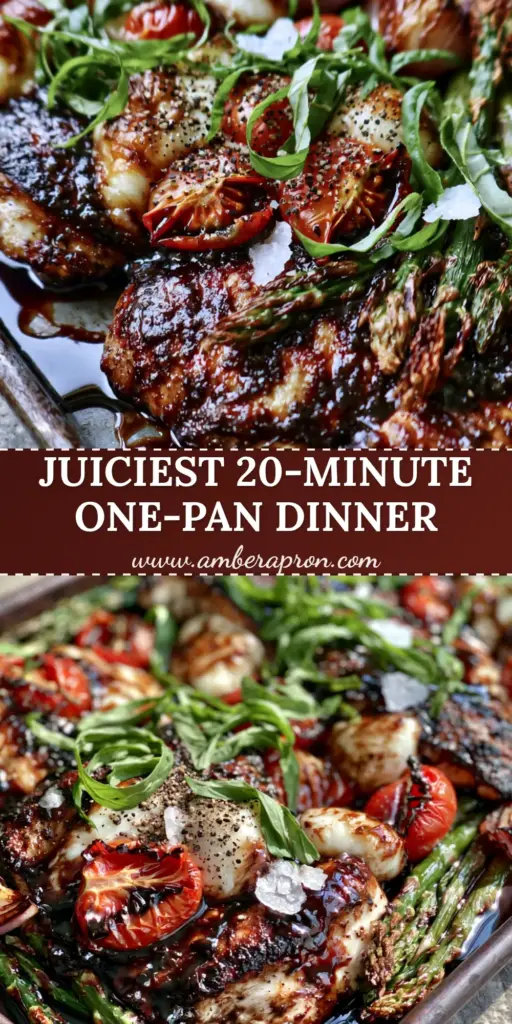
This Balsamic Chicken is a testament to the fact that simple ingredients, when treated with the right culinary techniques, can produce extraordinary results. The contrast of the syrupy reduction against the melted mozzarella and blistered tomatoes creates a restaurant-quality experience right at home.
If you enjoyed this recipe, please leave a comment below and let me know how your sear turned out! Don’t forget to share your photos and tag us, or save this recipe to your “Easy Dinners” board on Pinterest for later.