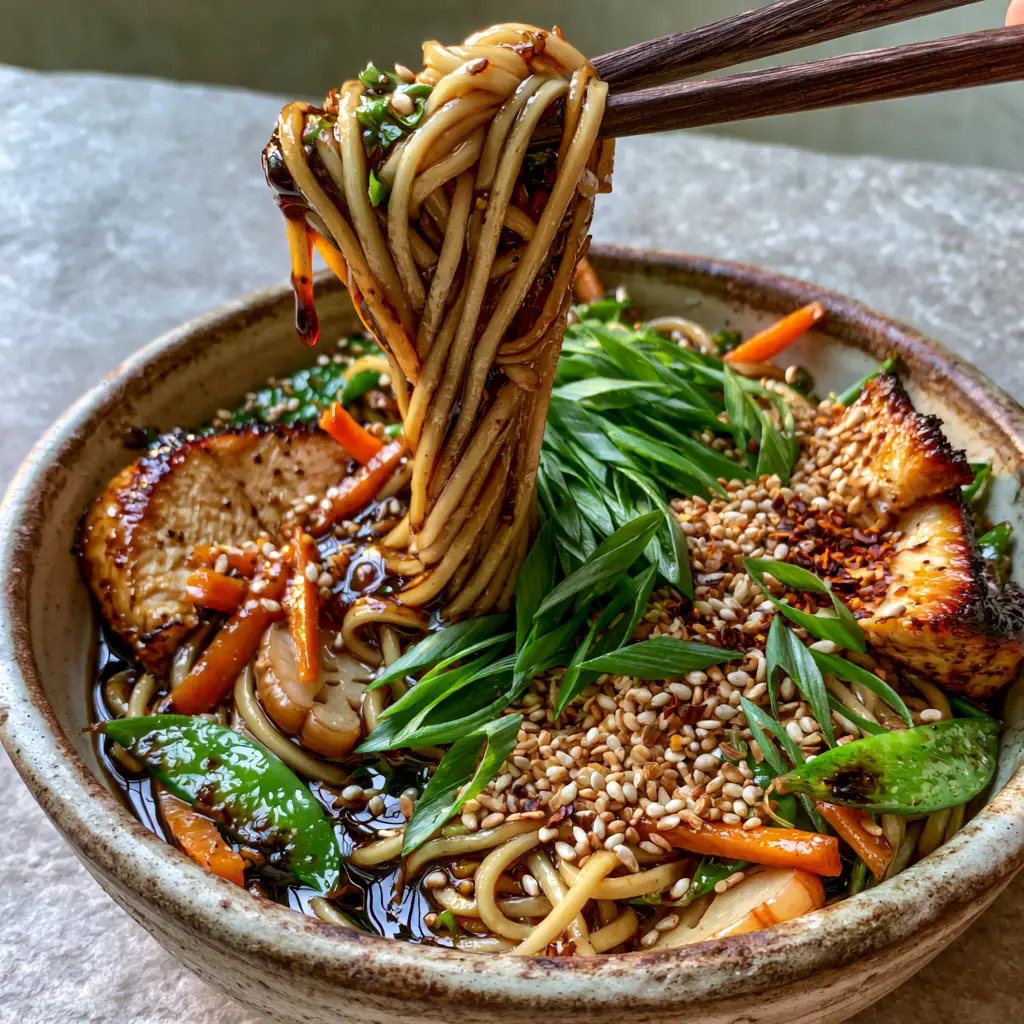
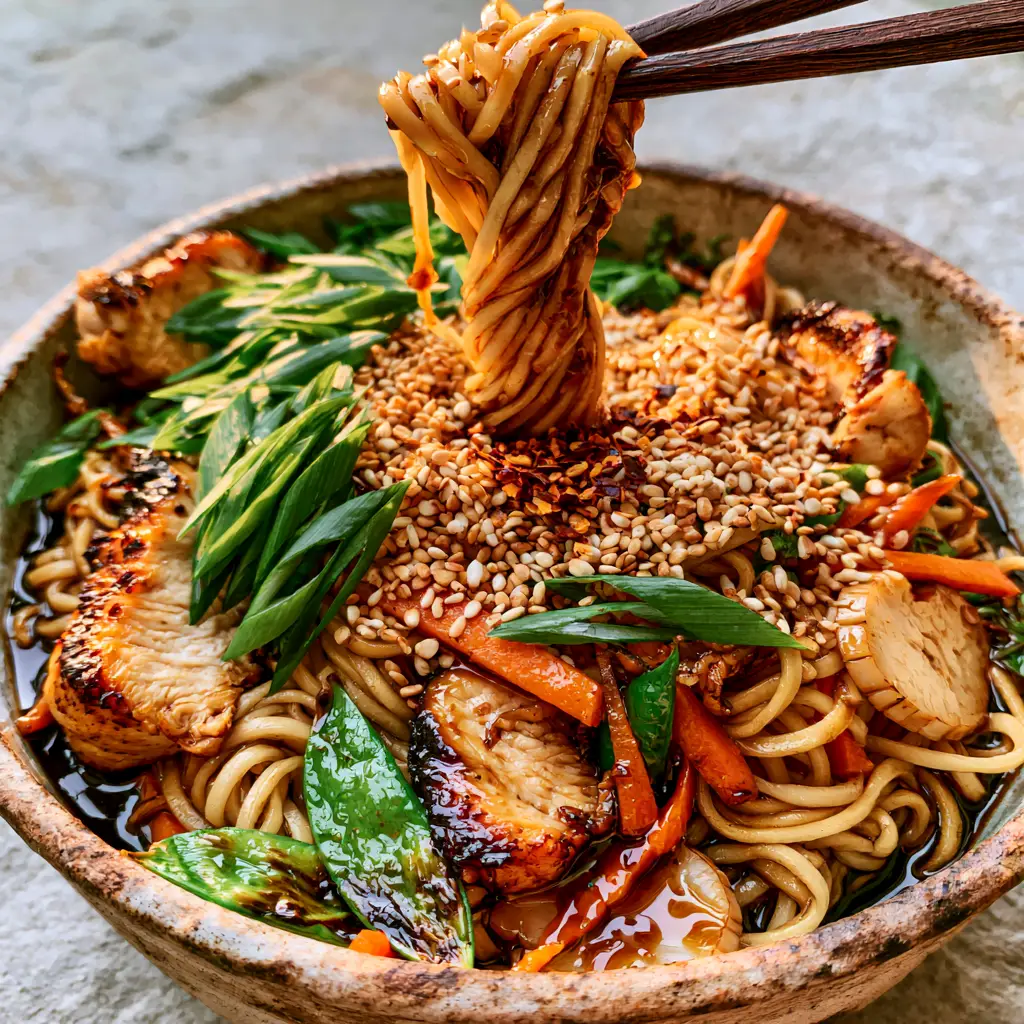
There is nothing quite as satisfying as a dramatic noodle pull, where thick, elastic egg noodles are heavily coated in a dark, shimmering, viscous umami soy sauce. This chicken lo mein recipe captures that exact restaurant-quality essence, bringing a macro-worthy masterpiece right to your kitchen table. If you have been searching for a dish that balances seared, golden-brown chicken breast with the vibrant crunch of julienned carrots and charred snap peas, you have found it.
The secret to a truly elite chicken lo mein lies in the architecture of the sauce and the temperature of your pan. We aren’t just tossing noodles in liquid; we are emulsifying a deep, dark glaze that clings to every strand. Every bite offers a symphony of textures, from the snap of water chestnuts to the nutty finish of toasted white sesame seeds and a subtle heat from red pepper flakes.
Whether you are a seasoned home cook or a weekend kitchen warrior, this guide will walk you through the culinary science of stir-fry. We will focus on achieving that perfect “wok hei” or breath of the wok at home, ensuring your snap peas have that signature char while the chicken remains succulent and caramelized. Let’s dive into the ultimate comfort food experience.
Why This Is the Best Chicken Lo Mein You Will Ever Make
- The Perfect Noodle Texture: We use thick, fresh egg noodles specifically chosen for their elasticity and ability to hold a heavy, viscous sauce without becoming mushy.
- Visual Masterpiece: With bright green scallions sliced on a sharp diagonal and vibrant julienned carrots, this dish looks as stunning as it tastes.
- Professional Searing: Our method ensures the chicken breast reaches a deep golden-brown crust, mimicking the high-heat results of a professional kitchen.
- Complex Umami Profile: By combining dark and light soy sauces with oyster sauce, we create a multi-dimensional flavor that goes beyond simple saltiness.
- The “Char” Factor: We teach you how to blister snap peas and sear chicken to create those dark, caramelized edges seen in the most appetizing food photography.
The Secret Sauce to Restaurant-Quality Umami
To achieve that dark, shimmering sheen, you must understand the role of your liquid ingredients. This isn’t just a seasoning; it is a structural element of the dish that provides the “viscous” quality seen in our visual blueprint. If you enjoy deep flavors, you might also want to try our Garlic Chicken Lo Mein for a pungent twist on this classic.
Fresh Egg Noodles (Lo Mein): 1 lb (454g). These are the backbone of the dish; look for thick, yellow noodles in the refrigerated section that promise a “springy” bite. If they are too thin, they will lose their identity under the weight of the chicken and vegetables.
Chicken Breast: 1 lb (454g). Sliced into thin, uniform strips, this lean protein is seasoned and seared until golden-brown. This provides the “meaty” texture required to balance the heavy carbohydrates of the noodles.
Dark Soy Sauce: 2 tbsp (30ml). This is the ingredient responsible for the deep, dark color and the slightly thicker consistency of the sauce. It is less salty than regular soy sauce but offers an intense molasses-like depth.
Light Soy Sauce: 2 tbsp (30ml). Used for the primary salt component, this ensures the noodles are seasoned to the core. It provides the high-frequency savory notes that contrast the dark soy’s bass notes.
Oyster Sauce: 3 tbsp (45ml). This provides the “glossy sheen” and the viscous body of the glaze. It adds a complex sweetness and brine that defines authentic lo mein.
Toasted Sesame Oil: 1 tsp (5ml). Added at the end, this “invisible” ingredient provides the aromatic high notes. It doesn’t just add flavor; it contributes to the shimmering surface of the finished dish.
Sugar or Honey: 1 tsp (5g). A touch of sweetness is chemically necessary to balance the salt and help the sauce caramelize onto the chicken edges. If you love a sweet-heat combo, check out our Hot Honey Chicken for more inspiration.
The Vibrant Vegetable Architecture
Vegetables in a chicken lo mein are not just filler; they provide the visual contrast and structural “crunch” that makes the dish exciting. For those who prefer a more veggie-forward profile, our Chicken and Mushroom stir-fry is another great option to explore.
Snap Peas: 1.5 cups (150g). These must be fresh to achieve that “bright green” look with a “slight char.” We will sear them at high heat until they blister but remain crisp-tender.
Carrots: 1 large (100g). Julienned into thin matchsticks, these provide a pop of orange and a subtle sweetness. They should be cooked just enough to soften slightly while retaining a structural “snap.”
Water Chestnuts: 1 can (225g), sliced. These are the “crunch” champions of the dish. Their neutral flavor allows them to absorb the umami sauce while providing a distinct, watery crispness.
Green Onions: 3-4 stalks. Sliced on a sharp diagonal, these are used as a “heavy scatter.” They provide a fresh, pungent bite that cuts through the rich, salty sauce.
Cornstarch: 1 tbsp (8g). This is a foundational “invisible” ingredient. We use it to “velvet” the chicken and to ensure the sauce thickens into that perfect, dripping vertical stretch.
Essential Equipment for a Dramatic Noodle Pull
To recreate the visual of a “handheld smartphone photo of a dramatic noodle pull,” you need the right tools. A heavy-bottomed wok or a large cast-iron skillet is essential for heat retention. These materials allow you to sear the chicken and char the peas without the pan temperature dropping too significantly.
You will also need a sharp chef’s knife for those clean diagonal cuts on the scallions and the precise julienne on the carrots. Finally, use dark wood chopsticks to achieve that “perfect, dripping vertical stretch” when serving. The contrast between the dark wood and the shimmering noodles is a hallmark of professional food styling.
Step-By-Step: Achieving the Perfect Sear and Gloss
1. Preparing the Umami Foundation
In a small glass bowl, whisk together the dark soy sauce, light soy sauce, oyster sauce, sesame oil, and sugar. Ensure the sugar is fully dissolved; this creates the “viscous” texture that will eventually coat the egg noodles. Set this aside to let the flavors meld while you prepare the proteins.
2. Velveting and Searing the Chicken
Toss your sliced chicken breast with 1 teaspoon of oil and 1 tablespoon of cornstarch. This “velveting” technique protects the meat from the high heat, ensuring it remains tender inside while developing “golden-brown caramelized edges.” Heat 2 tablespoons of oil in your wok until it just begins to smoke, then sear the chicken in a single layer until a deep crust forms.
3. Blistering the Snap Peas and Carrots
Remove the chicken and add the snap peas and julienned carrots to the hot pan. Look for the “visual cue” of the pea skins starting to pucker and turn brown in spots—this is the “char” mentioned in the blueprint. Add the water chestnuts for the final 30 seconds of this stage just to warm them through.
4. The Noodle Integration
Boil your thick egg noodles according to the package instructions, but stop 1 minute early to ensure they remain “elastic.” Drain them and immediately toss them into the wok with the vegetables and chicken. Pour the prepared sauce over the top, and using tongs, lift and swirl the noodles until they are “heavily coated” and the sauce is “shimmering.”
5. The Final Flourish and Garnish
Turn off the heat and add a “heavy scatter” of diagonally sliced green onions. Sprinkle the surface “densely” with toasted white sesame seeds and a pinch of red chili flakes for that “macro” detail. The final result should have a “visible glossy sheen” reflecting the light, just like a professional photo.
Expert Tips for Success
- Don’t Overcrowd the Pan: If you add too much chicken at once, it will steam rather than sear. Work in batches to get those golden-brown edges.
- Dry the Noodles: Ensure your noodles are well-drained before adding them to the wok. Excess water will thin out the sauce, preventing it from becoming “viscous.”
- High Heat is Key: You want the pan screaming hot before the vegetables hit. This is how you achieve “bright green snap peas with a slight char.”
- The Chopstick Lift: When serving, use your dark wood chopsticks to grab a large portion of noodles and lift them high. This allows the sauce to settle and drip, creating that “dramatic noodle pull.”
What to Serve With Chicken Lo Mein
While this dish is a complete meal in a bowl, it pairs beautifully with other Chinese-American staples. For a multi-course dinner, consider starting with our Chicken Taquitos for a fusion appetizer, or perhaps some Honey Glazed Chicken Bites for a sweeter side profile.
If you are looking for something lighter to balance the heavy noodles, a Spinach Mandarin Salad provides a citrusy brightness that cleanses the palate between bites of rich, umami chicken lo mein. For more mushroom-focused sides, our Sautéed Mushroom Recipes can add even more earthy depth to your meal.
Storage, Reheating, and Freezing
Storage: Keep leftover chicken lo mein in an airtight container in the refrigerator for up to 3 days. The noodles will continue to absorb the sauce, so they may become more flavorful but slightly less “elastic” over time.
Reheating: For the best results, reheat in a skillet over medium heat with a splash of water or chicken broth. This loosens the “viscous” sauce and restores that “shimmering” look. Avoid the microwave if possible, as it can make the chicken rubbery.
Freezing: We do not recommend freezing this dish, as the texture of the egg noodles and the snap peas will degrade significantly upon thawing. This is a dish best enjoyed fresh for that “macro-perfect” texture.
Frequently Asked Questions
Yes, but ensure you use ‘lo mein’ or ‘thick egg noodles.’ Boil them until just under al dente so they remain elastic and don’t break apart during the high-heat stir-fry process.
Use the ‘velveting’ technique by tossing the chicken in cornstarch before searing. This creates a protective layer that browns beautifully while keeping the interior succulent.
The primary difference is the cooking method. Lo Mein (tossed noodles) are boiled and then stirred into the sauce at the end, whereas Chow Mein (fried noodles) are often parboiled and then fried until crispy.
The gloss comes from a combination of oyster sauce and cornstarch. The oyster sauce provides a natural shimmer, while the cornstarch emulsifies the oils and liquids into a viscous glaze that clings to the noodles.
Dark soy sauce is used primarily for its deep mahogany color and rich, molasses-like depth. It is less salty than light soy sauce but essential for the visual appeal of a dark, shimmering sauce.
The Ultimate Chicken Lo Mein Recipe
Chicken Lo Mein with Glossy Umami Sauce and Charred Snap Peas
Ingredients
Equipment
Method
- In a bowl, combine dark soy, light soy, oyster sauce, sesame oil, and sugar. Set aside.
- Toss sliced chicken breast with cornstarch and a splash of oil to ensure golden-brown edges when seared.
- Heat oil in a wok over high heat. Sear chicken until golden-brown and caramelized. Remove and set aside.
- Add snap peas and carrots to the wok. Stir-fry on high until snap peas are bright green with a slight char.
- Add boiled egg noodles, seared chicken, and sauce to the wok. Toss until noodles are heavily coated and shimmering.
Notes
Use dark soy sauce specifically for the deep mahogany color.
Closing & Call to Action
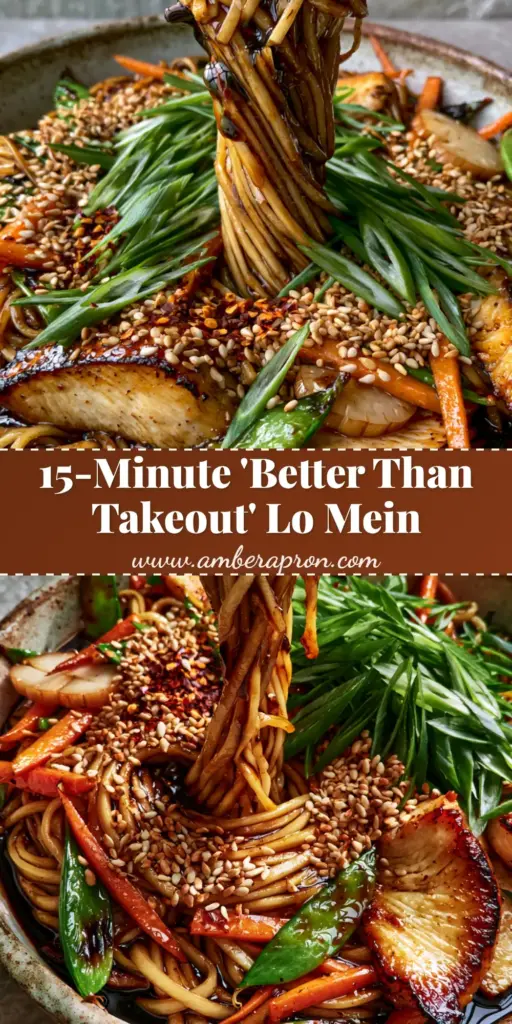
This chicken lo mein is more than just a quick dinner; it is a masterclass in texture and flavor. From the “dramatic noodle pull” to the “caramelized chicken breast,” every element is designed to satisfy your cravings for authentic stir-fry. If you enjoyed this recipe, please leave a comment below and tell us how your “charred snap peas” turned out!
Don’t forget to sign up for our newsletter for more elite recipes and culinary tips. If you loved the visuals of this dish, make sure to share it and follow us on Pinterest for more inspiration. Happy cooking!