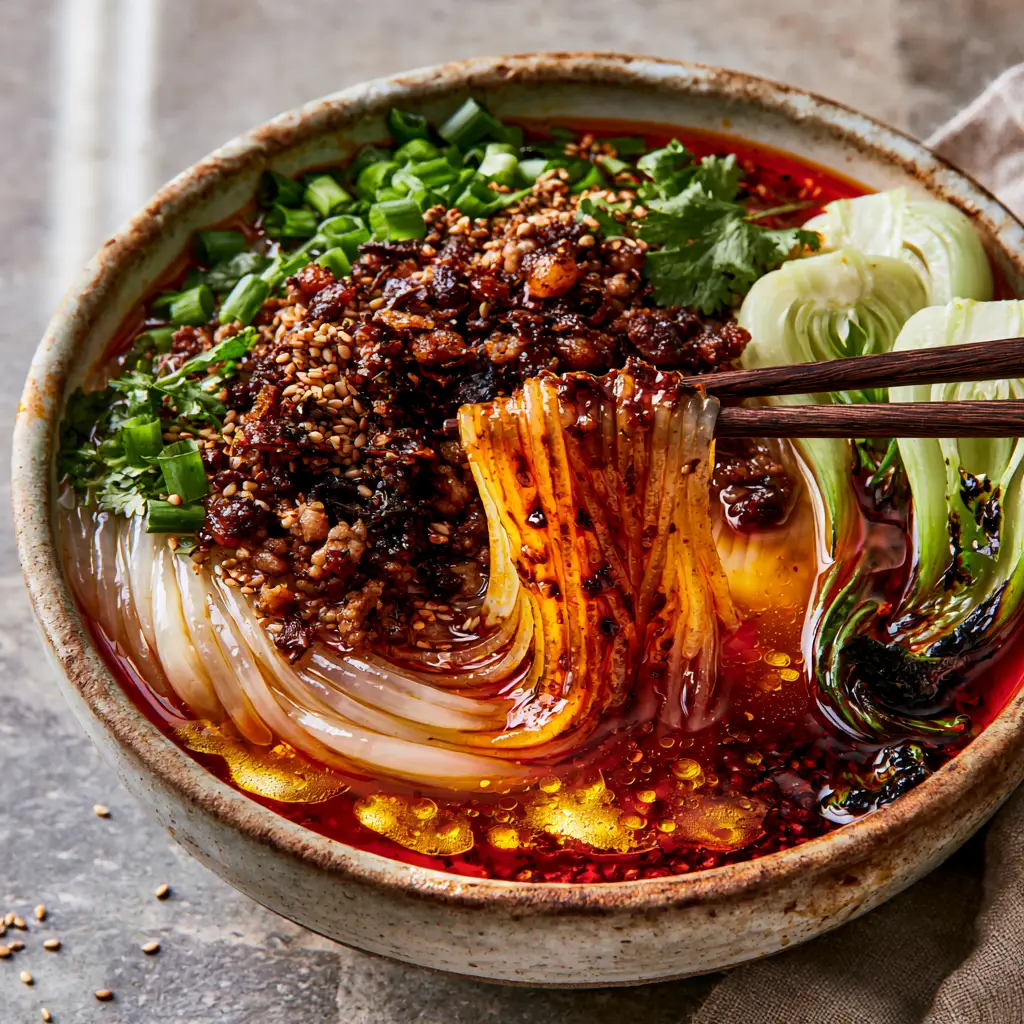
This Chinese Rice Noodle Soup is the ultimate comfort bowl, featuring semi-translucent, glossy rice noodles submerged in a vibrant red chili oil broth. Inspired by the bold flavors of Yunnan province, every spoonful delivers a complex balance of heat, numbing Sichuan peppercorn, and deeply savory caramelized ground pork. If you have been searching for a restaurant-quality meal that looks as stunning as a professional food photograph, this recipe is designed to impress both your palate and your Pinterest feed.
Why You Will Love This Yunnan-Style Rice Noodle Soup
- Textural Contrast: Experience the satisfying snap of soak-and-flash-seared rice noodles paired with crispy, browned pork crumbles.
- Complex Broth: A rich, aromatic base featuring vibrant red chili oil and golden droplets of fat for maximum mouthfeel.
- Charred Elements: We don’t just boil the greens; we use blanched baby bok choy with charred tips to add a smoky dimension.
- Aromatic Finish: Infused with Sichuan peppercorn oil and toasted white sesame seeds for a numbing, nutty finish.
If you enjoy comforting bowls like my healing chicken noodle soup or a hearty lasagna soup, this spicy Asian alternative will quickly become a weekly staple in your kitchen rotation.
Essential Ingredients for Authentic Chinese Rice Noodle Soup
To achieve the specific visual and flavor profile of a professional kitchen, each ingredient serves a specific culinary purpose. Do not skip the searing process, as it is the secret to the dish’s depth.
The Noodle Base
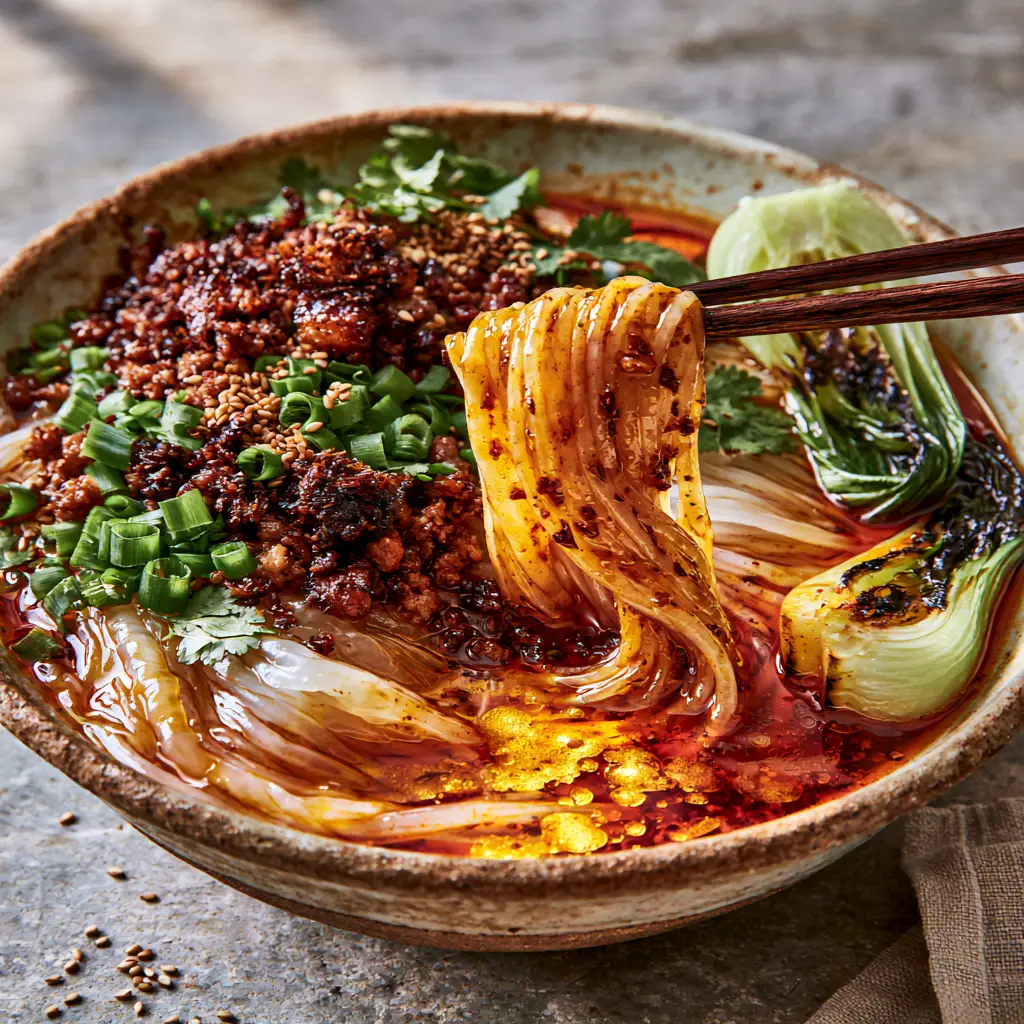
Dried Rice Noodles (Mixian style): Look for medium-thickness dried rice sticks. We use a soak-and-flash-sear method to ensure they stay semi-translucent and glossy without becoming mushy in the hot broth.
The Umami Pork Topping
Ground Pork: High-fat content is preferred here. We cook it until it reaches a state of caramelized ground pork crumbles, providing a salty, crispy counterpoint to the soft noodles.
Aromatic Paste: A mix of minced garlic, ginger, and fermented bean paste (Doubanjiang) to create that signature deep red hue and fermented funk.
The Vibrant Broth
Chicken or Pork Stock: Use a high-quality stock as the canvas for your spices. You might even use leftovers from a homestyle chicken noodle soup base.
Red Chili Oil: This provides the vibrant red chili oil broth seen in the blueprint. It should be rich enough to form golden droplets of fat on the surface.
Sichuan Peppercorn Oil: Essential for the “Mala” (numbing and spicy) sensation that defines authentic Yunnan cuisine.
Fresh Garnishes and Greens
Baby Bok Choy: We halves these lengthwise and blanch them, finishing with a quick sear to get those charred tips.
Fresh Herbs: A generous heap of finely chopped fresh scallions and fresh cilantro sprigs for brightness.
Toasted White Sesame Seeds: For a final layer of crunch and visual pop.
Step-by-Step Instructions for the Perfect Bowl
1. Prepare the Silk-Textured Rice Noodles
Place 8 oz (225g) of dried rice noodles in a large heatproof bowl. Cover with boiling water and let soak for 8-10 minutes until pliable but still firm.
Drain the noodles and rinse under cold water to remove excess starch. This ensures the noodles remain glossy and semi-translucent.
Heat 1 tsp (5ml) of neutral oil in a wok over high heat. Toss the noodles for 60 seconds just to “flash-sear” them. This locks in the texture before they hit the soup.
2. Achieve Caramelized Pork Perfection
In the same wok, add 1 tbsp (15ml) of oil. Add 1/2 lb (225g) of ground pork. Spread it into a flat layer and let it sit undisturbed for 2 minutes.
Break the meat into small bits. Continue cooking until the moisture evaporates and the meat begins to sizzle in its own fat, creating crispy, browned, and caramelized crumbles.
Stir in your garlic, ginger, and 1 tbsp (15g) of spicy bean paste. Cook until the oil turns a deep, translucent red.
3. Blister and Blanch the Bok Choy
Bring a small pot of salted water to a boil. Drop in the baby bok choy halves for 60 seconds. Remove and pat dry.
Press the cut side of the bok choy onto the hot wok surface for 30 seconds until charred edges form. This adds a sophisticated bitterness to the Chinese Rice Noodle Soup.
4. Construct the Aromatic Red Chili Broth
In a medium pot, combine 4 cups (950ml) of stock with 2 tbsp (30ml) of red chili oil and 1 tsp (5ml) of Sichuan peppercorn oil. Bring to a gentle simmer.
Taste the broth; it should be highly seasoned to flavor the neutral rice noodles. If you prefer a milder soup, you might enjoy my homemade vegetable soup instead.
5. Final Assembly and Presentation
Divide the seared noodles between two rustic ceramic bowls. Pour the boiling broth over the noodles, ensuring the golden droplets of fat are evenly distributed.
Top with a generous heap of the caramelized ground pork. Arrange the charred bok choy on one side.
Finish with a flurry of scallions, cilantro, and toasted sesame seeds. The final result should look exactly like a hyper-realistic food photography hero shot.
Expert Tips for Success
- Don’t Over-Soak: Rice noodles continue to cook in the hot broth. Always undercook them slightly during the soaking phase.
- High Heat for Pork: To get those crispy browned bits, you must use high heat. If the pan isn’t hot enough, the pork will steam rather than caramelize.
- Oil Quality Matters: Use a high-quality Sichuan chili oil with plenty of sediment (flakes) for the most authentic flavor profile.
- Serving Temperature: Serve immediately. Rice noodles absorb liquid quickly; waiting even ten minutes can change the texture of the dish.
Storage, Reheating & Freezing
Storage: It is best to store the components separately. Keep the broth in one container and the pork/noodles in another. They will stay fresh in the refrigerator for up to 3 days.
Reheating: Reheat the broth until boiling, then pour over the noodles. Do not boil the noodles in the broth, or they will lose their semi-translucent quality.
Freezing: I do not recommend freezing the assembled Chinese Rice Noodle Soup. However, the caramelized pork crumbles freeze beautifully for up to 2 months.
What to Serve With This Spicy Noodle Bowl
This soup is a complete meal on its own, but it pairs wonderfully with a side of smashed cucumber salad or crispy spring rolls. If you are hosting a soup-themed dinner, consider serving a lighter option like tomato lentil soup alongside it for variety.
Frequently Asked Questions
Yes! Substitute the ground pork with finely crumbled firm tofu or minced mushrooms seared in the same way. Use a robust vegetable stock and ensure your bean paste is vegan-friendly for a delicious plant-based version.
The key is high heat and patience. Let the ground pork sit in the hot wok undisturbed for a few minutes until it browns deeply. Only break it up once a crust has formed to ensure maximum caramelization.
This version has a moderate kick from the red chili oil and a numbing sensation from the Sichuan peppercorn oil. You can easily control the heat by adjusting the amount of chili oil added to the individual serving bowls.
For the most authentic texture, look for dried ‘Mixian’ rice noodles. They are medium-thick and round. If unavailable, standard dried rice sticks or even thick vermicelli will work, provided you don’t overcook them.
The Ultimate Chinese Rice Noodle Soup Recipe
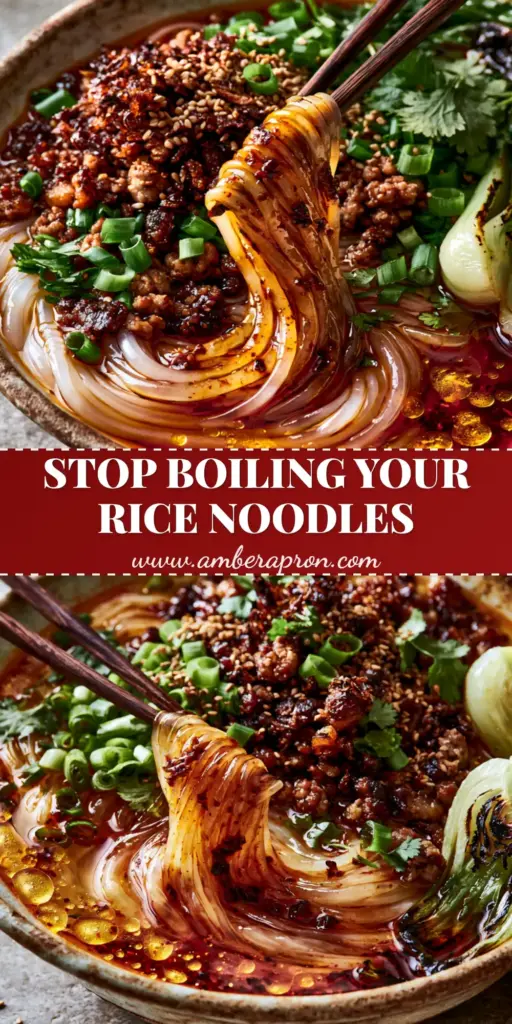
Chinese Rice Noodle Soup with Spicy Caramelized Pork
Ingredients
Equipment
Method
- Soak rice noodles in boiling water for 8-10 minutes until semi-translucent and glossy. Drain and flash-sear in a wok for 60 seconds.
- Brown ground pork in a wok over high heat until crispy and caramelized. Stir in aromatics and spicy bean paste.
- Combine stock, chili oil, and Sichuan peppercorn oil in a pot and bring to a simmer with golden fat droplets on top.
Notes
Flash-searing the noodles prevents them from becoming waterlogged in the soup.
Save This Recipe to Pinterest!
Did you love the numbing heat and crispy pork of this Chinese Rice Noodle Soup? Pin this recipe to your Dinner Ideas or Asian Recipes board so you never lose it! Be sure to follow amber_apron for more hyper-realistic food inspiration.
If you make this dish, snap a photo and share it in the comments below or tag me on social media. I love seeing your charred bok choy and glossy noodles! Please leave a 5-star rating in the recipe card if this satisfied your spicy soup cravings.