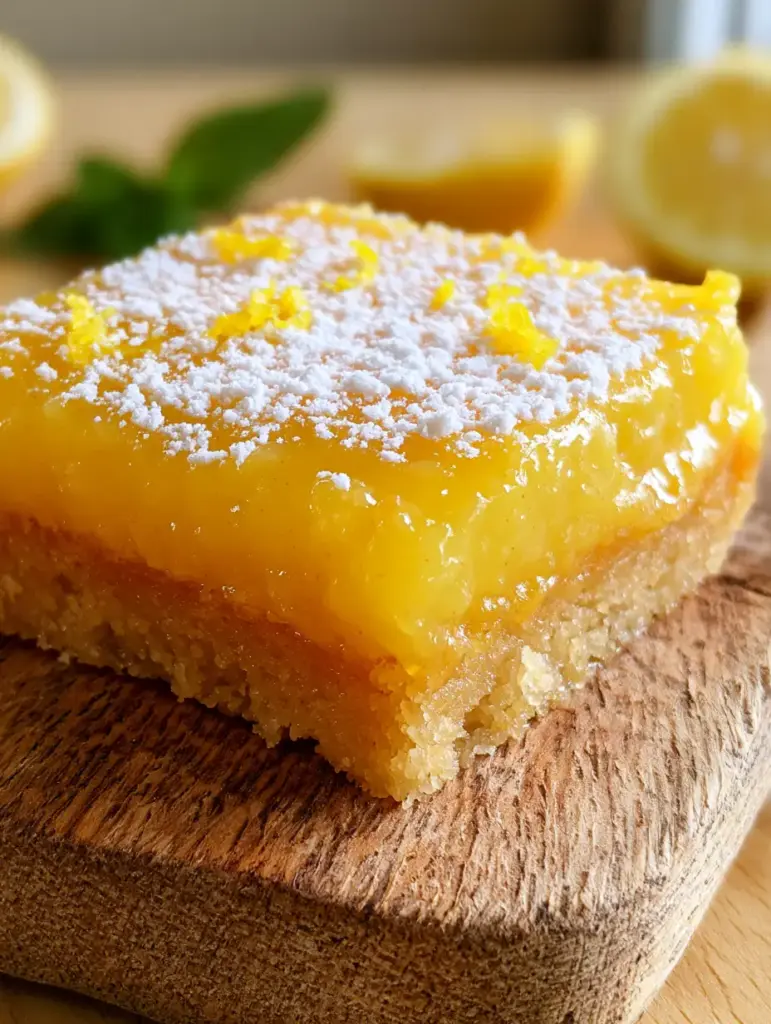
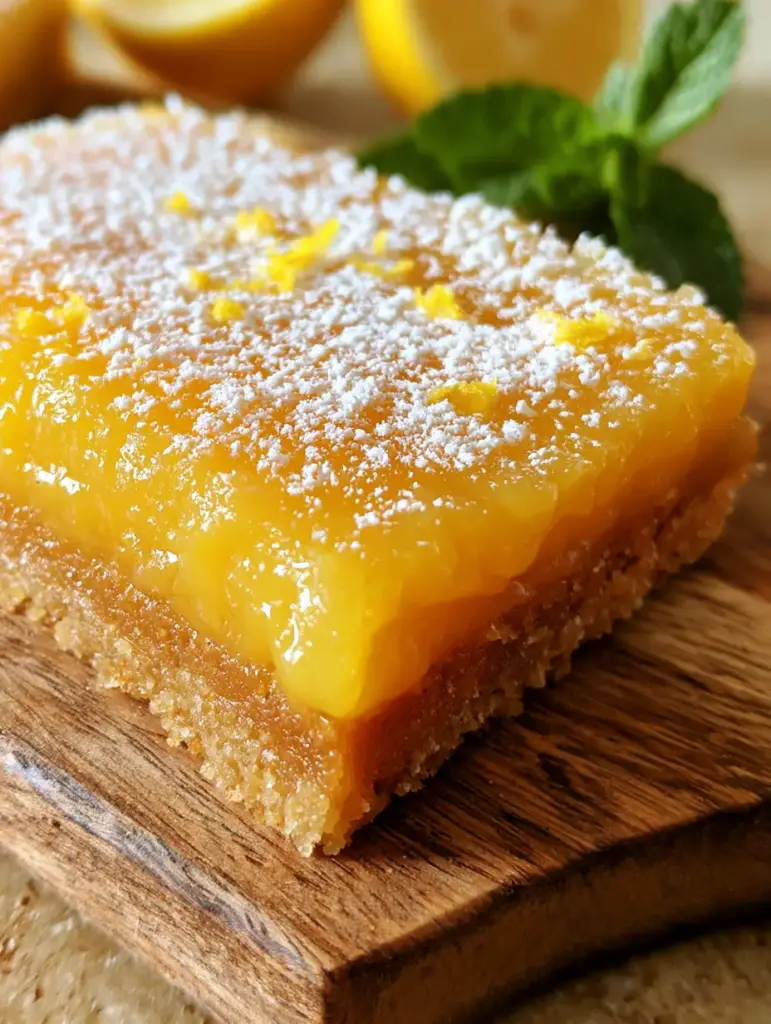
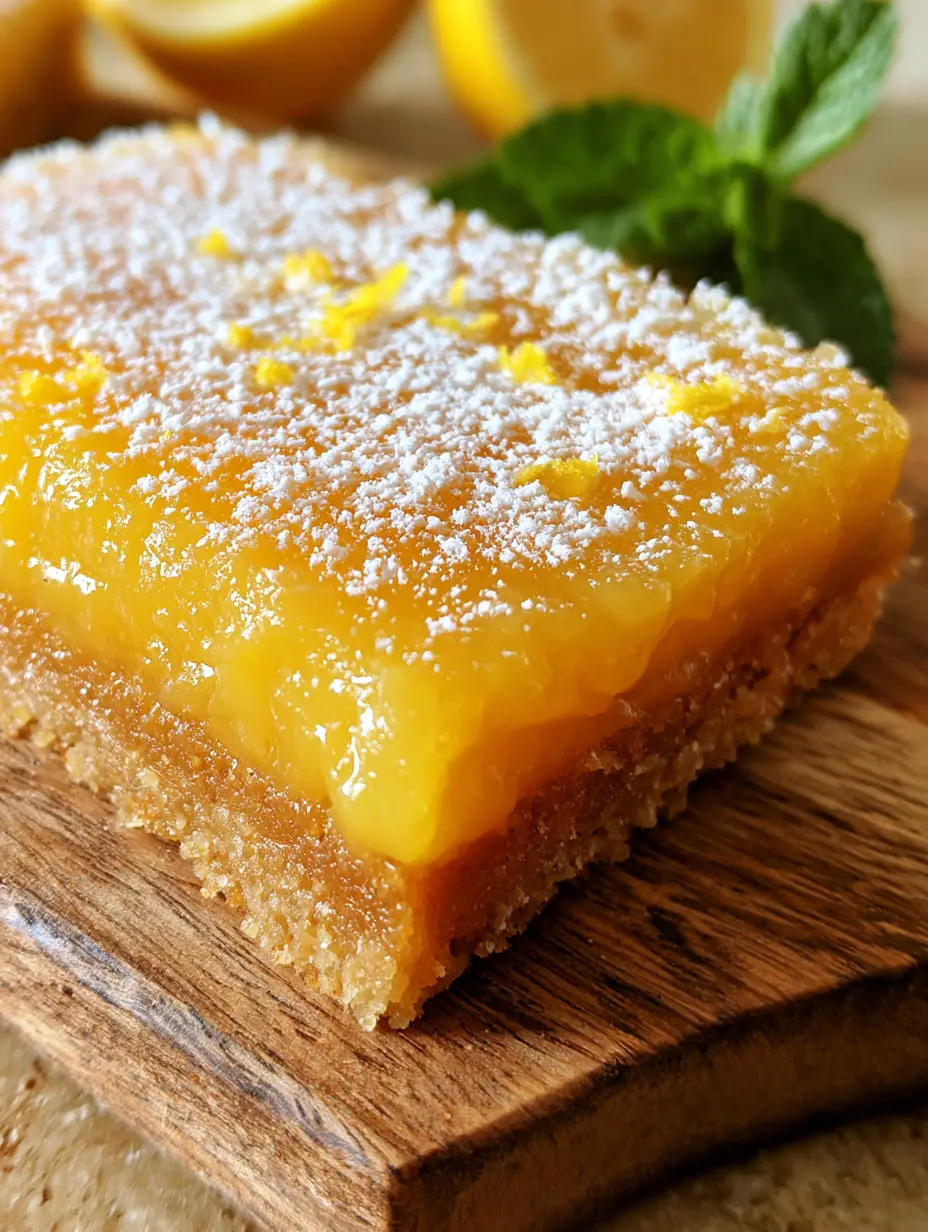
If you have been searching for the ultimate paleo lemon bars, your quest ends here. These bars are the pinnacle of grain-free baking, featuring a thick, vibrant opaque yellow lemon curd that sits atop a perfectly golden-brown, buttery almond flour shortbread crust. The contrast between the crumbly base and the glossy, slightly gooey curd is a sensory experience that rivals any traditional bakery version.
Designed to be both visually stunning and scientifically sound, these bars capture the essence of summer. We have meticulously crafted this recipe to ensure the curd remains translucent yet stable, accented with microscopic honey bubbles and a light dusting of fine coconut flour to mimic that classic powdered sugar look. Every bite offers a sharp citrus punch balanced by the earthy richness of the almond base.
Why You Will Love This Vibrant Paleo Lemon Bars Recipe
This recipe is more than just a dessert; it is a masterclass in texture and flavor balance. Here is why these paleo lemon bars stand out from the crowd:
- The Crumbly Golden Base: We use a specific ratio of almond flour and healthy fats to achieve a golden-brown crust that holds its shape while melting in your mouth.
- The Glossy Curd Texture: By using honey and fresh lemon juice, the filling achieves a thick, translucent appearance with a vibrant yellow hue that glows under natural light.
- Clean, Sharp Edges: Thanks to the inclusion of arrowroot starch, these bars slice with microscopic precision, revealing the distinct layers of crust and curd.
- Refined Sugar-Free: These bars are sweetened naturally, ensuring you get the bright tang of the citrus without the sugar crash.
The Anatomy of the Perfect Grain-Free Citrus Treat
Creating world-class paleo lemon bars requires an understanding of how alternative flours and natural sweeteners interact. The crust must be pre-baked to prevent sogginess, a common pitfall in paleo baking. This ensures the “buttery” almond flour shortbread remains crisp even after the curd is added.
The filling is where the magic happens. We rely on the emulsification of eggs and the thickening power of arrowroot to create a curd that is both gooey at the edges and firm enough to hold its height. The addition of fresh grated lemon zest provides those tiny specks of bright yellow that indicate a truly fresh, homemade treat.
If you are looking for more grain-free inspiration for your weekly menu, check out our paleo family dinner recipes for healthy main course ideas that pair perfectly with these bars.
Essential Ingredients for Success
Super-Fine Almond Flour: 2 cups (192g). This provides the structural foundation for the golden-brown crust, mimicking the “crumbly” texture of traditional shortbread.
Melted Coconut Oil or Grass-Fed Butter: 1/2 cup (120ml). This fat source is what gives the crust its “buttery” mouthfeel and helps it achieve that deep golden color during the par-bake.
Raw Honey: 1/2 cup (170g) for the filling and 3 tbsp (64g) for the crust. Honey creates those characteristic microscopic bubbles and provides the glossy sheen seen in high-resolution food photography.
Fresh Squeezed Lemon Juice: 3/4 cup (180ml). Use only fresh lemons; the bottled stuff won’t provide the vibrant opaque yellow curd or the sharp tang required for this recipe.
Large Room-Temperature Eggs: 3 units. Eggs act as the binder and the primary thickening agent for the translucent lemon layer.
Arrowroot Starch: 2 tbsp (16g). This “invisible” ingredient is scientifically necessary to ensure the curd sets with sharp edges when sliced.
Fine Coconut Flour: 1 tsp (2g) for dusting. This acts as a visual substitute for powdered sugar, giving the bars a soft, matte finish on top.
Fresh Lemon Zest: 1 tbsp (6g). These bright yellow specks add visual depth and an extra punch of citrus aroma.
Equipment for Bakery-Quality Results
To achieve the sharp edges and thick layers described in our blueprint, you will need a few specific tools. An 8×8 inch (20x20cm) square baking pan is essential for getting the height right; a larger pan will result in thin, sad-looking bars.
Parchment paper is non-negotiable for these paleo lemon bars. It allows you to lift the entire block of bars out of the pan once chilled, which is the only way to get those clean, professional-looking slices on a rustic wooden board. A fine-mesh sieve is also required for that perfectly even dusting of coconut flour.
Step-by-Step Instructions to Mastering Paleo Lemon Bars
Crafting the Golden-Brown Shortbread Crust
Begin by preheating your oven to 350°F (175°C). Line your square baking pan with parchment paper, leaving an overhang on the sides for easy removal later.
In a medium bowl, whisk together the almond flour and a pinch of salt. Stir in the melted coconut oil (or butter) and 3 tablespoons of honey until a crumbly dough forms. You should see visible textures in the dough, much like traditional shortbread.
Press the dough firmly into the bottom of the prepared pan in an even layer. Bake for 12-15 minutes, or until the edges are a deep golden-brown. This par-baking step is crucial for maintaining the “buttery” almond flour shortbread texture. Set aside to cool slightly while you prepare the filling.
Whisking the Vibrant Lemon Curd
In a clean bowl, whisk the 3 eggs until well combined. Gradually whisk in 1/2 cup of honey, the fresh lemon juice, and the fresh grated lemon zest. You will start to see microscopic honey bubbles forming on the surface—this is exactly what we want for that authentic texture.
Sift the arrowroot starch over the mixture and whisk vigorously until no white clumps remain. The mixture should look vibrant and opaque yellow. Pour the lemon filling over the warm, pre-baked crust.
The Final Bake and Setting the Curd
Lower the oven temperature to 325°F (165°C). Place the pan back in the oven and bake for 20-25 minutes. Watch for the visual cue: the center should be just set and no longer jiggle, but the surface should still look glossy and slightly translucent.
Remove from the oven and let the bars cool completely at room temperature. For the best results and sharpest edges, refrigerate the bars for at least 4 hours, or ideally overnight. This allows the curd to reach its peak gooey-yet-firm consistency.
Slicing and Finishing Touches
Once fully chilled, use the parchment paper to lift the bars onto a rustic wooden board. Use a sharp, warm knife to slice the bars into 16 squares. Wipe the knife between every cut to ensure those “sliced sharp edges” remain perfectly clean.
Just before serving, use a fine-mesh sieve to apply a light dusting of coconut flour over the top. This mimics the look of powdered sugar. Garnish with a few extra specks of lemon zest for a professional finish.
Expert Tips for the Ultimate Citrus Bars
- Temperature Control: Ensure your eggs are at room temperature. This prevents the coconut oil in the crust from seizing if it comes into contact with the filling.
- Avoid Overbaking: If the curd starts to brown on top, you have baked it too long. You want a vibrant, opaque yellow finish, not a toasted one.
- The Slicing Secret: Run your knife under hot water and dry it before each cut. The heat helps the blade glide through the thick, gooey curd without sticking.
- Zest First: Always zest your lemons before juicing them. It is nearly impossible to zest a squeezed lemon!
What to Serve with Your Paleo Treats
These paleo lemon bars are a bright conclusion to any meal. If you are hosting a brunch, they pair beautifully with our paleo banana muffins. For a light summer lunch, try serving them after a refreshing blueberry spinach salad.
If you prefer a savory lead-in, consider a quick dinner like our honey glazed chicken bites. The honey notes in the chicken will echo the subtle honey bubbles in the lemon curd.
Storage and Freezing Guidelines
These bars must be stored in the refrigerator due to the fresh lemon curd. Keep them in an airtight container for up to 5 days. The almond flour crust stays remarkably crisp in the cold.
You can also freeze these bars! Wrap individual squares tightly in parchment paper and store in a freezer-safe bag for up to 3 months. Thaw in the refrigerator for 2 hours before serving. The dusting of coconut flour may absorb moisture in the freezer, so re-dust them just before eating for that fresh, matte look.
Frequently Asked Questions
Yes, you can substitute maple syrup, but the curd will be slightly less glossy and may have a darker, more amber hue compared to the vibrant yellow achieved with honey.
The secret is chilling the bars overnight and using a warm, clean knife. Wipe the blade after every single cut to prevent the curd from dragging.
While coconut flour mimics powdered sugar best, you can also use a light dusting of arrowroot starch or simply leave them plain with extra lemon zest.
This usually happens if the crust isn’t par-baked long enough or if the filling is added while the crust is completely cold. Follow the par-baking instructions carefully for a crisp result.
If the curd is runny, it likely needs more time to bake or chill. Ensure you used the arrowroot starch and that your eggs were at room temperature to ensure proper emulsification.
The Ultimate Paleo Lemon Bar Recipe
Paleo Lemon Bars with a Buttery Almond Flour Shortbread Crust
Ingredients
Equipment
Method
- Preheat oven to 350°F (175°C). Combine almond flour, salt, melted oil, and honey. Press into a parchment-lined 8x8 pan. Bake for 12-15 minutes until golden-brown.
- Whisk eggs, honey, lemon juice, and zest. Sift in arrowroot starch and whisk until smooth with microscopic bubbles on top.
- Lower oven to 325°F (165°C). Pour filling over crust and bake for 20-25 minutes until the center is set but still glossy.
- Cool at room temperature, then refrigerate for at least 4 hours. Lift out of pan, slice into sharp edges with a warm knife, and dust with coconut flour.
Notes
Wipe the knife clean between every single slice for professional bakery results.
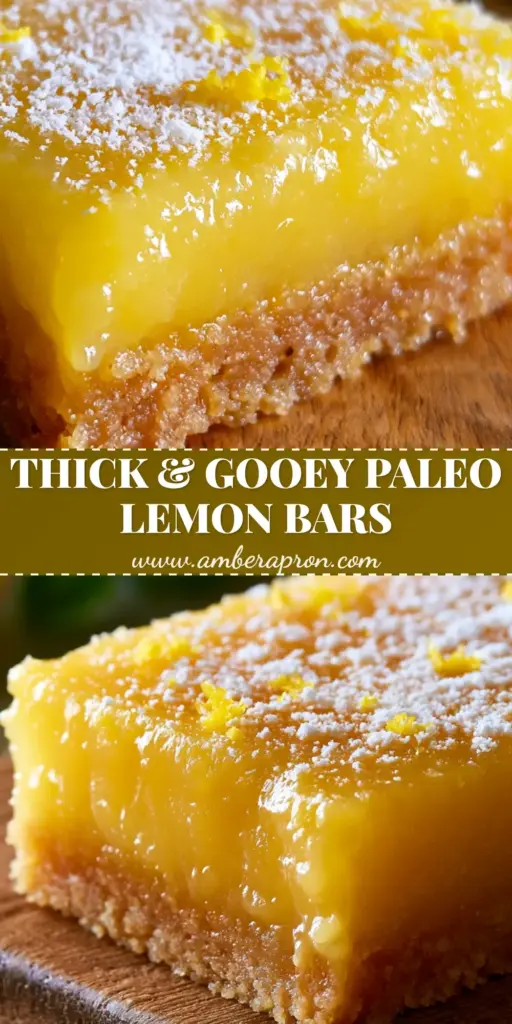
These bars represent the perfect marriage of culinary science and paleo-friendly ingredients. With their thick, vibrant curd and crumbly almond base, they are guaranteed to become a staple in your dessert rotation. Don’t forget to take a photo of your creation—those sharp edges and golden crust are definitely social-media worthy!
If you enjoyed this recipe, please leave a comment below and let us know how yours turned out! You can find more grain-free inspiration on our Pinterest page. Happy baking!