There is nothing quite as visually arresting or culinarially satisfying as a perfectly executed Sesame Ginger Tuna Steak. This dish is a masterclass in texture, pitting a heavy, crunch-laden crust of toasted seeds against a buttery, rare ruby-red center that melts the moment it hits your tongue.
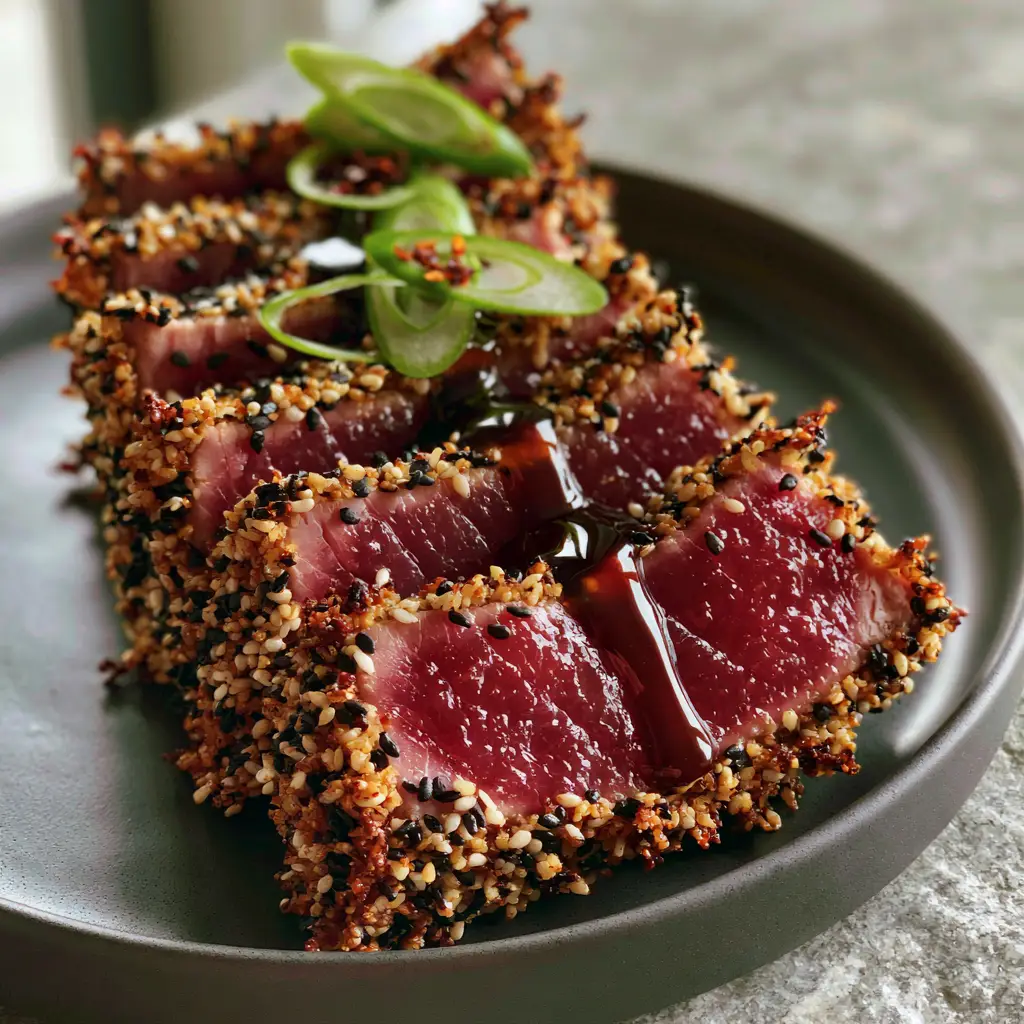
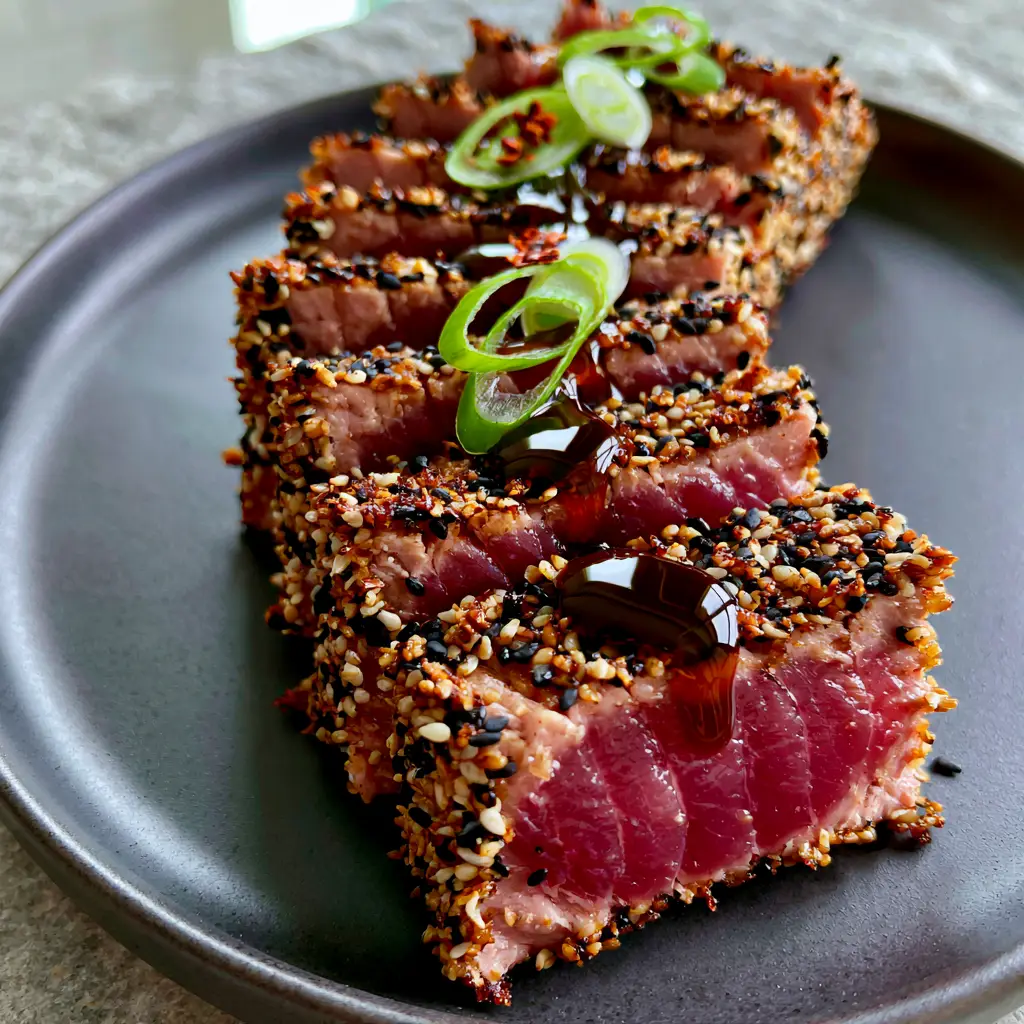
Inspired by the sleek aesthetic of modern bistro plating, our recipe focuses on achieving that elusive “edge-to-edge” sesame crust. We then elevate the protein with a thick, glossy dark amber soy-ginger reduction that provides a salty-sweet counterpoint to the oceanic richness of the Ahi.
Whether you are hosting a sophisticated dinner party or looking for a high-protein meal that feels like a splurge, this Sesame Ginger Tuna Steak delivers. Follow along as we break down the forensic details of the perfect sear and the science behind a flawless reduction glaze.
The Anatomy of a Perfect Ahi Saku Block
To achieve the uniform 1-inch strips seen in professional food photography, you must start with a high-quality Ahi tuna Saku block. These are rectangular cuts specifically designed for consistent searing and slicing, ensuring every piece has the same ratio of crust to rare interior.
Look for tuna that is labeled as “Sashimi Grade” or “AAA Grade” to ensure safety for a rare preparation. The color should be a deep, vibrant ruby red without any dark spotting or brownish “blood lines,” which can indicate oxidation or age.
Freshness is paramount for the Sesame Ginger Tuna Steak, so if you cannot find fresh Saku blocks, high-quality frozen-at-sea options are often superior. Defrost them slowly in the refrigerator for 24 hours to maintain the structural integrity of the delicate muscle fibers.
The Essential Pantry for a Perfect Sesame Ginger Tuna Steak Masterpiece
Thick-Cut Ahi Tuna Steak: The centerpiece of the dish, providing a meaty, succulent base. Use 1.5-inch (3.8cm) thick cuts to ensure the center remains rare while the exterior achieves a heavy sear.
Toasted Black and White Sesame Seeds: This dual-color blend provides a sophisticated visual contrast and a nutty, earthy flavor. The seeds create a literal armor around the fish, protecting the delicate interior from overcooking.
Soy Sauce and Fresh Ginger: These form the foundation of our glossy glaze. The ginger adds a sharp, aromatic heat that cuts through the fattiness of the fish, while the soy provides essential umami.
Honey or Brown Sugar: While not visible in the final garnish, a sweetener is the “invisible” ingredient required to create the thick, syrupy consistency of the dark amber reduction. It allows the sauce to cling to the fish rather than running off the plate.
High Smoke-Point Oil: Use avocado oil or grapeseed oil (not olive oil) for the sear. These oils can withstand the 450°F (232°C) temperatures required to toast the sesame seeds without smoking or turning bitter.
Fresh Green Onions and Red Chili Flakes: These garnishes provide the final pops of color. The paper-thin scallion rounds offer a fresh, sulfurous bite, while the chili flakes add a microscopic touch of heat and visual texture.
The Tools Required for a Professional Crust
Achieving a heavy, edge-to-edge crust requires more than just a hot pan; it requires the right surface. A heavy-bottomed cast iron skillet is the gold standard for a Sesame Ginger Tuna Steak because of its incredible heat retention.
You will also need a sharp chef’s knife or a yanagiba (sushi knife) to get those clean, 1-inch (2.5cm) strips. A dull blade will tear the sesame crust and compress the rare center, ruining the “clean-cut” aesthetic we are aiming for.
Finally, keep a set of stainless steel kitchen tongs nearby. These allow you to “walk” the tuna steak on its edges, ensuring that every single millimeter of the sesame coating is toasted to a golden-brown perfection.
Mastering the Architecture of the Sesame Crust
Prepping the Protein for Maximum Adhesion
The biggest challenge with a Sesame Ginger Tuna Steak is keeping the seeds on the fish. Start by patting the tuna completely dry with paper towels; moisture is the enemy of a good sear and seed adhesion.
Brush a very thin layer of the soy-ginger reduction (before it is fully thickened) or a light coating of egg white onto the tuna. This acts as a culinary “glue,” ensuring the black and white sesame seeds stay put during the high-heat cooking process.
The Two-Tone Breading Technique
Mix your black and white sesame seeds in a flat dish or shallow tray. Press the tuna steak firmly into the mixture, applying pressure to ensure a dense, even coating on all sides, including the thin edges.
If you enjoy exploring different Asian-inspired textures, you might find this technique similar to the preparations used in Thai-style crispy proteins, where the coating is just as important as the meat itself.
The Culinary Science of the Flash Sear
Achieving the 45-Second Golden Standard
Heat your cast iron skillet until a drop of water dances and evaporates instantly. Add 2 tablespoons (30ml) of high-heat oil and wait until it just begins to shimmer and show wisps of smoke.
Carefully lay the tuna in the pan. You should hear an immediate, aggressive sizzle—this is the sound of the Maillard reaction and the sesame seeds toasting simultaneously.
Sear for exactly 45 to 60 seconds per side. This short duration creates the “perfectly seared and golden-brown” exterior described in our visual blueprint while keeping the interior a “vibrant, cool ruby red.”
Resting for Visual Perfection
Once seared, transfer the tuna to a cutting board and let it rest for 3-5 minutes. This allows the heat to stabilize so the juices don’t run when you slice it into those uniform strips.
While the tuna rests, you can prep other components of your meal. If you’re looking for a balanced plate, consider pairing this with a crisp Asian-inspired ramen slaw for added crunch.
Building the Glossy Soy-Ginger Reduction
To achieve the “thick, glossy dark amber” look, we reduce the soy sauce, grated ginger, and honey over medium-high heat. The goal is a “nappe” consistency—where the sauce is thick enough to coat the back of a spoon.
Watch for the bubbles; they will change from small and thin to large and viscous as the water evaporates and the sugars caramelize. This reduction is much more concentrated than a standard marinade, providing a punch of flavor in every drop.
The intensity of this glaze is similar to the bold flavors found in sweet and savory Korean-style beef, but with a cleaner, sharper ginger finish that complements the seafood.
Expert Tips for Visual and Culinary Success
- Keep it Cold: Keep the tuna in the refrigerator until the very moment you are ready to crust and sear it. A cold center ensures it stays ruby red even while the outside gets a heavy, hot sear.
- The Seed Ratio: Use a 1:1 ratio of black to white sesame seeds. The black seeds provide a striking contrast against the charcoal plate, while the white seeds show the golden-brown progress of the sear.
- Slice Against the Grain: Look at the muscle fibers of the Ahi and slice perpendicular to them. This ensures the rare center is as tender as possible.
- The Drizzle Technique: Use a small spoon or a squeeze bottle to apply the glaze. For the best “food blogger aesthetic,” drizzle precisely over the center of the sliced strips to catch the light.
What to Serve with Your Sesame Ginger Tuna Steak
A dish this visually striking deserves side dishes that don’t compete for attention but provide complementary textures. A simple bed of jasmine rice or a light, protein-packed grain salad works beautifully to soak up any extra ginger glaze.
If you want to lean further into the Asian flavor profile, a side of bok choy or a spicy cucumber salad provides a refreshing, watery crunch that cleanses the palate between bites of the rich Ahi tuna.
Storage, Reheating, and Safety
The Sesame Ginger Tuna Steak is best enjoyed immediately. Because the center is rare, the texture will change significantly if reheated, as the tuna will cook through to a grey, firm state.
If you have leftovers, eat them cold the next day in a salad. Leftover seared tuna is safe in the refrigerator for up to 24 hours. We do not recommend freezing the tuna after it has been seared, as the sesame crust will become soggy upon thawing.
Frequently Asked Questions
While possible, a cast iron skillet is highly recommended. Cast iron retains the high heat necessary to toast the seeds quickly without overcooking the delicate interior of the fish.
Pat the tuna extremely dry first. You can then brush a very thin layer of soy sauce or egg white onto the steak before pressing it firmly into the seed mixture to act as a glue.
For a 1.5-inch thick steak, sear for exactly 45-60 seconds per side over high heat. Any longer will result in a ‘medium’ center, losing that vibrant ruby-red aesthetic.
Yes, provided you are using high-quality sashimi-grade tuna. This grade is handled specifically to be safe for raw or rare consumption.
Always choose ‘Sashimi Grade’ or ‘AAA’ Ahi (Yellowfin) or Bigeye tuna. Since the center remains raw, high-quality, fresh-frozen tuna is the safest and most flavorful option.
The Signature Sesame Ginger Tuna Steak Recipe
Sesame Ginger Tuna Steak: The Ultimate Restaurant-Quality Sear at Home
Ingredients
Equipment
Method
- Combine soy sauce, grated ginger, honey, and rice vinegar in a small saucepan over medium heat.
- Simmer for 5-7 minutes until the liquid reduces by half and becomes a thick, glossy dark amber glaze. Set aside.
- Pat the Ahi tuna steaks completely dry with paper towels.
- Mix black and white sesame seeds on a plate. Press each side of the tuna firmly into the seeds until a heavy, even crust is formed.
- Heat avocado oil in a cast iron skillet over high heat until just beginning to smoke.
- Sear the tuna for 45-60 seconds per side. The exterior should be golden-brown while the interior remains ruby-red.
- Rest for 3 minutes, then slice into uniform 1-inch strips using a very sharp knife.
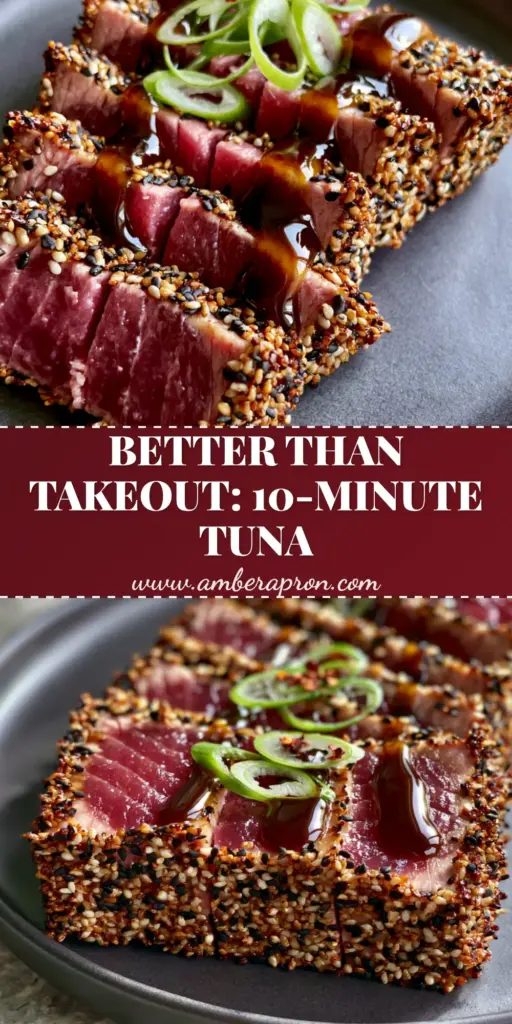
- Arrange on a matte charcoal plate, drizzle with the glossy reduction, and top with green onions and chili flakes.
Notes
Don't skip the honey; it's essential for the glossy, thick consistency of the reduction.
Closing & Call to Action
Mastering the Sesame Ginger Tuna Steak is a rite of passage for any home cook looking to bring restaurant-quality aesthetics to their own kitchen. The combination of the heavy seed crust and the glistening soy reduction creates a dish that is as beautiful to look at as it is delicious to eat.
If you enjoyed this deep dive into culinary forensics and plating, please leave a comment below and let us know how your sear turned out! Don’t forget to share your creations and follow us on Pinterest for more visually-driven recipe inspiration.