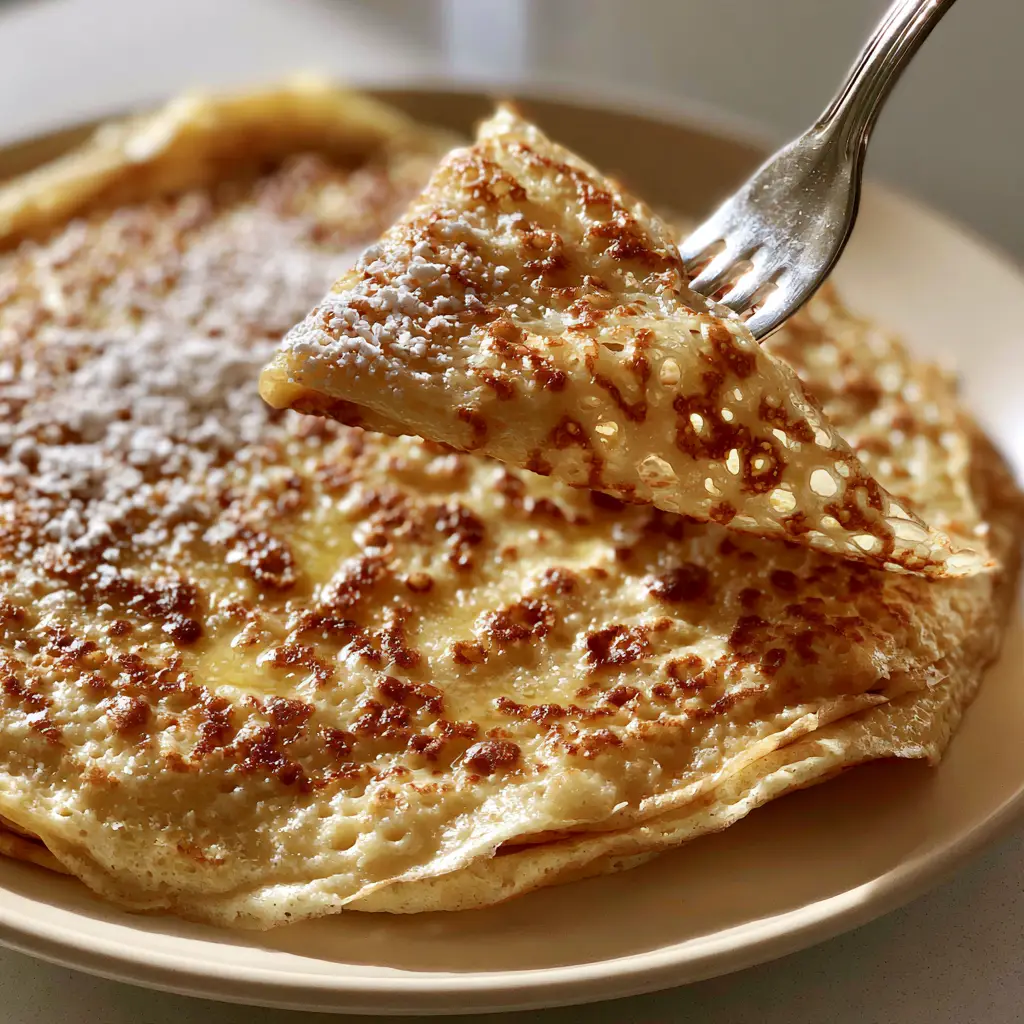
There is a specific kind of magic that happens in a quiet kitchen during the early hours of the morning. As the soft morning window light spills across a matte cream ceramic plate, the sight of a stack of French crepes, shimmering with a salted butter glaze, feels less like a meal and more like a work of art.
The perfect crepe is a study in contrasts. It must be paper-thin and translucent enough to catch the light, yet flexible enough to fold without a hint of cracking or dryness.
Achieving that iconic, golden-brown lacy leopard spotting requires more than just a recipe; it requires an understanding of the culinary science behind the batter. In this guide, we are going to master the micro-pores and delicate textures that define the authentic French experience.
The Visual Anatomy of a Flawless French Crepe
Before we pick up a whisk, let us define what success looks like for these French crepes. A professional-grade crepe is distinguishable by several key visual and sensory markers that we will achieve today.
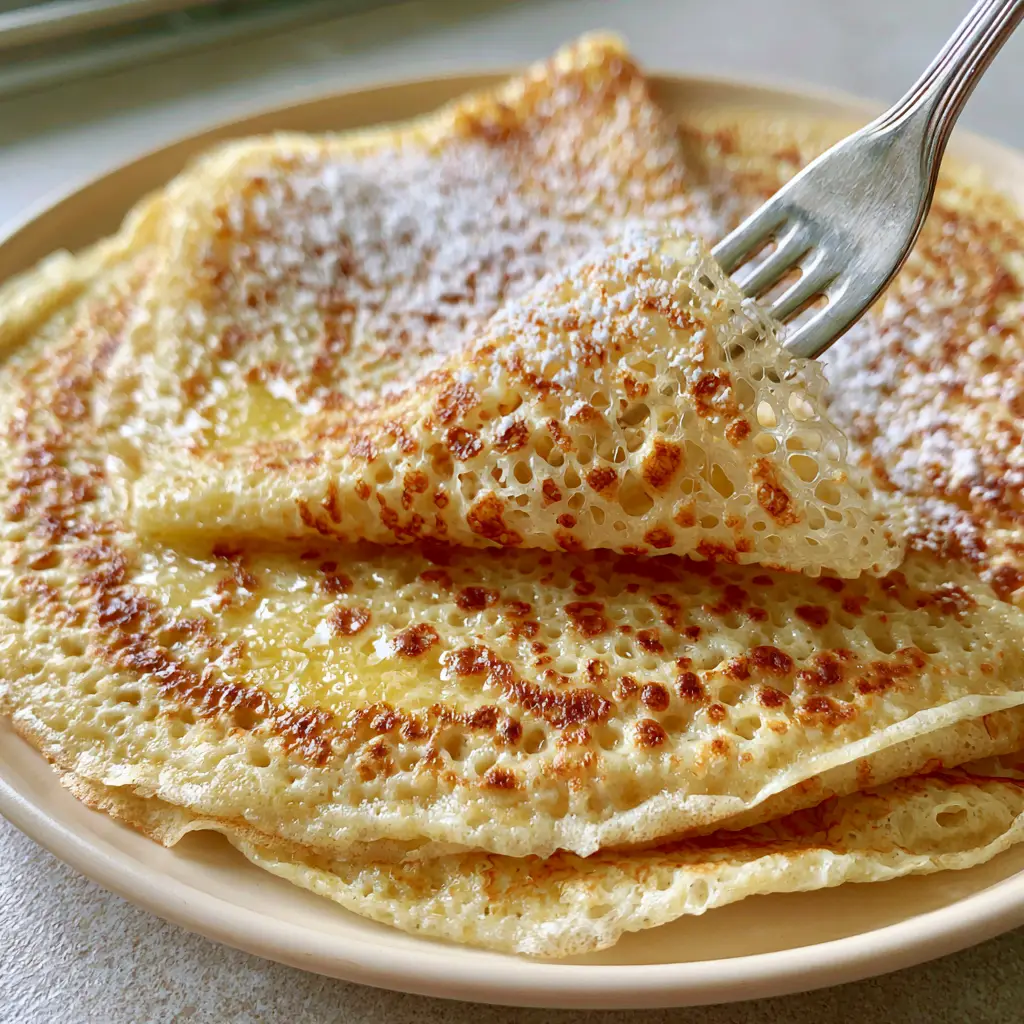
- Translucency: When you lift the top crepe with a silver fork, it should be thin enough to see the light passing through it.
- Leopard Spotting: This refers to the irregular, golden-brown lacy pattern created by the Maillard reaction between the milk solids and the hot pan.
- Micro-Porous Texture: A properly rested batter creates tiny pores on the surface, perfect for soaking up a microscopic dusting of powdered sugar.
- Supple Flexibility: The edges must remain soft and buttery, ensuring the crepe can be rolled or folded without any brittle snapping.
Essential Components for Translucent Crepe Batter
To achieve the results seen in our visual blueprint, every ingredient serves a structural purpose. We aren’t just making a thin pancake; we are creating a delicate emulsion.
All-Purpose Flour: 1.5 cups (190g)
This provides the necessary gluten structure to prevent the crepes from tearing while remaining thin. It is the foundation of the paper-thin cooked crepe batter.
Whole Milk: 2 cups (480ml)
The fats and sugars in whole milk are responsible for that beautiful lacy leopard spotting. Use room temperature milk to ensure a smooth, clump-free integration.
Large Eggs: 4 units
Eggs act as the primary binder and provide the “lift” and flexibility. The high egg-to-flour ratio is what allows the crepe to be incredibly flexible without cracking.
Melted Salted Butter: 3 tbsp (45g) plus more for glazing
The butter in the batter prevents sticking and creates a subtle sheen. Brushing the finished stack with extra melted salted butter adds that signature professional glow.
Granulated Sugar: 2 tbsp (25g)
Beyond sweetness, sugar aids in the caramelization process. This is the “secret” to achieving deep golden-brown spots in a short cooking window.
Fine Sea Salt: 1/2 tsp (3g)
Salt is a flavor enhancer that balances the richness of the butter and eggs. It tightens the gluten network just enough to provide structural integrity.
Powdered Sugar: For dusting
An ultra-fine dusting provides a matte finish that contrasts beautifully with the buttery sheen of the crepe surface.
Professional Tools for Success
To achieve a result that looks like a handheld smartphone photo from a high-end bistro, your equipment matters. You need tools that manage heat distribution and surface tension efficiently.
A 10-inch (25cm) heavy-bottomed non-stick skillet or a traditional carbon steel crepe pan is non-negotiable. The heavy base ensures even heat, which is the only way to get consistent leopard spotting across the entire surface.
A fine-mesh sieve is your best friend for a professional texture. Straining the batter removes any microscopic flour clumps, ensuring the crepes are smooth and have those refined micro-pores.
The Science of Resting Your Batter
Why Gluten Relaxation is Mandatory
One of the most common mistakes when making French crepes is using the batter immediately. When you whisk flour and liquid, you develop gluten. If you cook it right away, the crepes will be rubbery and prone to shrinking in the pan.
Resting the batter for at least 30 minutes (or overnight) allows the starch granules to fully hydrate. This creates a more viscous, stable liquid that spreads into a paper-thin layer with ease.
During this rest, the air bubbles created by whisking will also dissipate. This is how you achieve a translucent, lacy texture rather than a “holy” or bubbly pancake-like surface.
Step-by-Step Mastery of the Crepe Technique
Crafting the Silky Emulsion
Start by whisking your eggs and milk together in a large bowl until fully combined. Sift the flour, sugar, and salt directly into the wet ingredients to prevent large lumps from forming.
Slowly whisk from the center outward, gradually drawing in the flour. Once smooth, whisk in the 3 tbsp (45g) of melted salted butter. The batter should have the consistency of heavy cream; if it feels too thick, add a tablespoon of milk.
Pass the entire mixture through a fine-mesh sieve into a clean bowl. Cover and refrigerate for at least 30 minutes to allow the “magic” of hydration to occur.
The Perfect Pan Temperature
Heat your non-stick skillet over medium heat. You will know it is ready when a drop of water flicked onto the surface dances and evaporates instantly.
Lightly grease the pan with a tiny bit of salted butter. You only need a thin film; too much fat will cause the batter to slide rather than grip and brown.
The Swirl and Sear
Lift the pan off the heat and pour in about 1/4 cup (60ml) of batter. Immediately tilt and swirl the pan in a circular motion so the batter coats the entire bottom in a thin, even layer.
Return the pan to the heat. Watch closely for the visual cues: the edges will begin to look dry and lacy, and tiny micro-pores will appear on the surface.
After about 60 seconds, use a thin spatula to lift an edge. If you see deep golden-brown leopard spotting, it is time to flip. The crepe should feel incredibly flexible and soft.
The Golden Finish
Flip the crepe and cook the second side for only 20-30 seconds. This side will never be as pretty as the first—that is the “chef’s secret”—so always serve the spotted side facing up.
Slide the cooked crepe onto a matte cream ceramic plate. Immediately brush the top with a subtle sheen of melted salted butter.
Expert Tips for Success
- The First Crepe Rule: The first crepe is almost always a “sacrificial” one. Use it to calibrate your pan temperature and grease levels.
- Control the Heat: If your crepes are pale and floppy without spots, turn the heat up. If they are browning too fast before you can swirl the batter, turn it down.
- Keep them Soft: Stack the crepes as you cook them. The steam between the layers keeps the edges from becoming dry or cracking.
- The Butter Glaze: Always use salted butter for the glaze. The salt crystals cut through the richness and make the flavor pop.
Storage, Reheating, and Freezing
French crepes are surprisingly durable. You can store a stack in the refrigerator for up to 3 days, provided they are wrapped tightly in plastic wrap to prevent them from drying out.
To reheat, place a single crepe in a dry skillet over medium heat for 15 seconds per side. This revives the butter glaze and restores the flexible texture.
For long-term storage, place a piece of parchment paper between each crepe and freeze the stack in a heavy-duty freezer bag for up to 2 months. Thaw in the fridge overnight before reheating.
What to Serve With These Delicate Crepes
While these are stunning with just a dusting of sugar, they are the perfect canvas for a variety of pairings. If you are in the mood for a themed breakfast, try filling them with fresh seasonal berries and cream.
For those who prefer a savory start to their day, these crepes work beautifully with savory Mediterranean-inspired fillings. If you are looking for more morning inspiration, our tangy Greek yogurt waffles offer a similarly sophisticated texture.
Finally, if you have leftover crepes, they make an excellent base for creative snack ideas or can be sliced into “ribbons” to top a sweet dessert bowl.
Frequently Asked Questions
Yes! A blender is excellent for achieving a lump-free emulsion. Just be sure to let the batter rest after blending to allow the air bubbles to escape, otherwise, your crepes will have holes.
This ‘leopard spotting’ is a result of the pan’s heat and the milk solids in the batter. Make sure your pan is medium-hot and use a tiny amount of salted butter to grease it, which encourages the Maillard reaction.
Stack the crepes on a plate and cover them with a clean kitchen towel. The residual steam keeps them warm and prevents the edges from becoming brittle or dry.
Rubbery crepes are caused by over-mixing or not resting the batter. Resting allows the gluten to relax, which ensures a tender, melt-in-your-mouth texture rather than a chewy one.
Tearing usually happens if the batter hasn’t rested long enough or if the crepe is too thin in the center. Ensure you rest the batter for 30 minutes to develop gluten stability and use a dedicated non-stick pan.
The Ultimate French Crepe Recipe Card
French crepes: The Secret to Paper-Thin Lacy Perfection
Ingredients
Equipment
Method
- In a large bowl, whisk together the milk and eggs until fully emulsified and pale yellow.
- Sift the flour, sugar, and salt into the milk mixture. Whisk from the center outward until a smooth batter forms. Stir in the melted butter.
- Pass the batter through a fine-mesh sieve to remove lumps. Cover and refrigerate for at least 30 minutes to allow the starch to hydrate and gluten to relax.
- Place your skillet over medium heat and lightly grease with a small amount of salted butter. The pan is ready when a drop of water sizzles instantly.
- Pour 1/4 cup (60ml) of batter into the center of the pan while simultaneously tilting and swirling to create a paper-thin, even layer.
- Cook for 60 seconds until the edges appear lacy and the bottom shows golden-brown leopard spotting. Flip gently using a spatula.
- Cook the second side for 20 seconds. Slide onto a plate and immediately brush with melted salted butter and a dusting of powdered sugar.
Notes
Ensure the pan is hot enough to create immediate browning for the best lacy texture.

Bringing the French Bistro Home
Mastering the art of French crepes is a rite of passage for any home cook. When you see that first lacy, golden-brown edge pull away from the pan, you’ll know you’ve nailed the technique. The combination of the melted salted butter glaze and the airy dusting of powdered sugar creates a sensory experience that is truly unmatched.
If you enjoyed this recipe, please leave a comment below and tell us how your leopard spotting turned out! Don’t forget to share your photos and follow us on Pinterest for more culinary inspiration and morning favorites.